Damp in Stone Buildings in Dorset
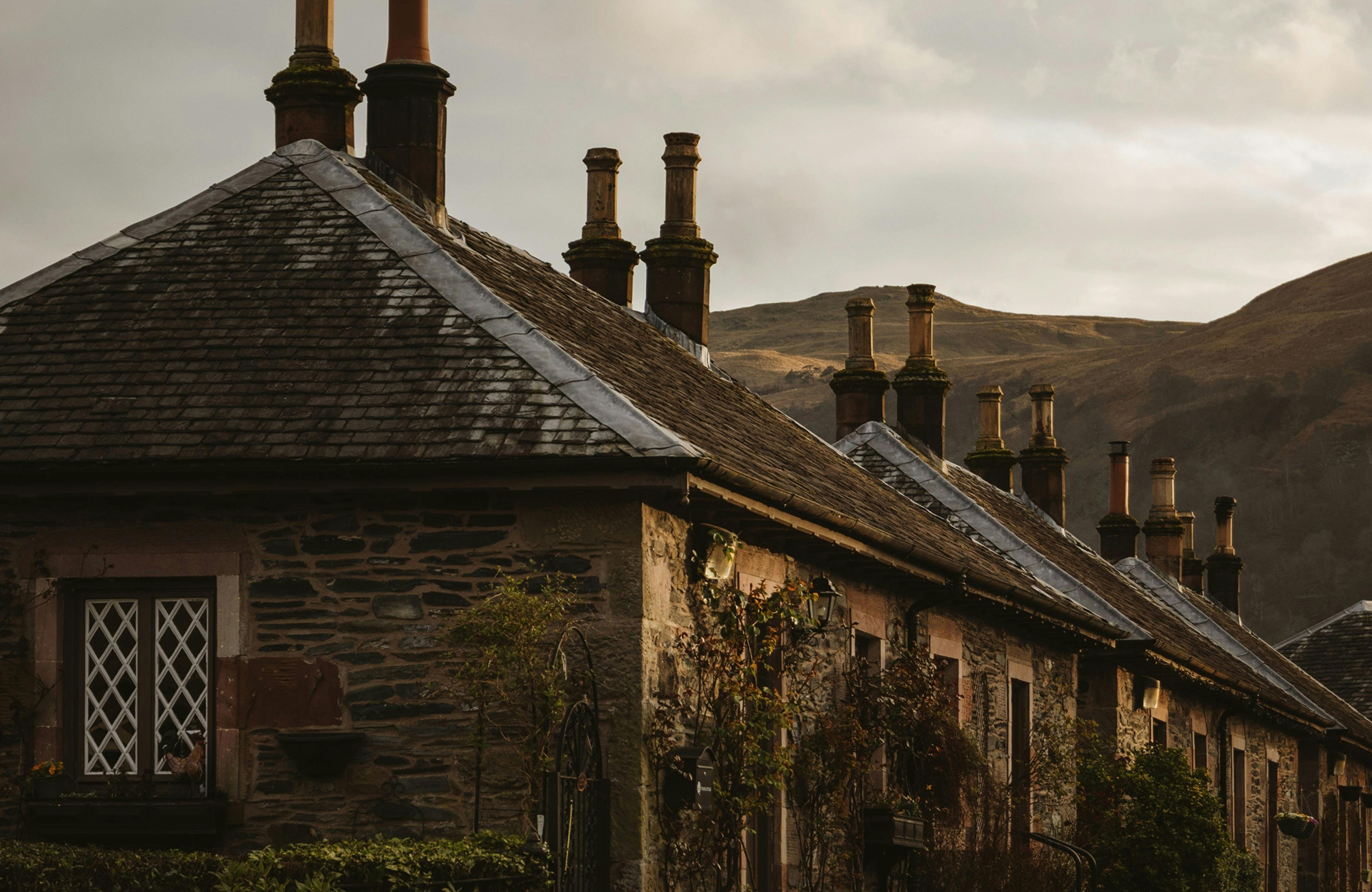
Damp in Period Properties: Understanding the Real Cause
Dorset’s stone buildings are among the most distinctive in southern England. The honey-coloured Ham stone cottages and farmhouses of the west, the grey-buff Purbeck stone properties of the Isle of Purbeck, the durable Portland stone of the south coast and the rubble-built stone houses of the rural villages – each material has its own character, its own regional concentration, and its own relationship with moisture.
That relationship matters enormously when damp problems appear. Stone buildings handle damp fundamentally differently from brick buildings, and the type of stone changes both the diagnosis and the appropriate remediation. A damp problem on a Ham stone cottage is not the same problem as a damp problem on a Purbeck stone farmhouse, and the wrong intervention on either can cause real and sometimes irreversible damage to the stone itself.
This guide is for owners of Dorset stone properties dealing with damp – and for the architects, surveyors and heritage consultants advising them. It draws on over a decade of working exclusively on period and listed properties across the county, including significant experience on every major Dorset stone type. We’ll cover the materials individually, the damp patterns specific to each, and what proper remediation looks like on a stone building of historic value.
A note on language. You’ll see the word “remediation” throughout this guide rather than “treatment.” That’s deliberate. Treating damp implies applying something to a symptom. Remediation means identifying and removing the cause. On a stone building, where the wrong materials can cause permanent damage to the masonry itself, that distinction matters more than ever.
Why Stone Buildings Behave Differently From Brick
IBefore getting into individual stones, it’s worth understanding the broader principle. Most general damp content treats “solid wall construction” as a single category, but stone walls behave quite differently from brick walls in ways that affect both damp diagnosis and remediation.
Stone is far more variable than brick. A solid brick wall is a relatively uniform structure – same material, same size, same firing characteristics, bonded in regular courses with lime mortar. A solid stone wall is, by comparison, irregular. The stones vary in size, shape and porosity. The bedding is uneven. The mortar body between stones is often substantial, sometimes accounting for as much of the wall’s surface area as the stone itself. The wall’s behaviour depends as much on the mortar as on the stone.
Stone porosity varies enormously. Ham stone is soft and porous. Portland stone is dense and harder. Purbeck stone sits between the two. Rubble construction often includes multiple stone types with different porosity in the same wall. The water absorption characteristics of a stone wall are determined by the specific stone – and the wrong assumption about porosity leads to the wrong remediation specification.
Stone walls often have rubble cores. Many older stone walls – particularly in larger or thicker construction – consist of dressed stone facing externally and internally, with a substantial rubble core between. The core is bonded with lime and often contains mixed stone, mortar fragments and voids. Moisture moving through such a wall doesn’t follow a simple path. Modern damp diagnostics designed for uniform construction often misread these walls completely.
Stone weathers visibly. Unlike brick, where weathering is gradual and often invisible, stone shows its history. Erosion patterns, salt deposition, biological growth, surface spalling – these visible signs are diagnostic for an experienced eye. Reading the building correctly requires understanding what each pattern means on the specific stone in question.
Stone is often softer than the mortar around it. This is the critical point for repair work. Original lime mortars were specified to be slightly softer than the surrounding masonry, so the mortar took the wear rather than the stone. When cement is used in repair – whether in pointing or render – it’s harder than soft heritage stones like Ham stone, and the stone faces start to bear the load. The result is accelerated erosion of historically valuable stone faces, often within a single generation.
These principles apply to every stone building in Dorset. The specifics change with the material – which is where the next sections go.
Damp In Ham Stone Buildings (West Dorset And The Somerset Border)
Ham stone is the honey-coloured oolitic limestone quarried from Ham Hill near Yeovil, just over the Dorset border in Somerset. It’s used extensively across the western fringe of Dorset, particularly through the villages around Sherborne, Beaminster, Bridport, Cerne Abbas and along the western edge where Dorset shades into Somerset. Many Dorset villages within easy carting distance of Ham Hill – historically meaning anywhere within a day’s transport – are built predominantly or substantially in Ham stone.
The material itself
Ham stone is soft. It carves easily, it weathers readily, and it absorbs water more than harder stones. These qualities are what make it beautiful – the warm golden tones develop precisely because the stone interacts with light and weather over time – but they also make it vulnerable.
Ham stone is also regionally specific in a way most building materials aren’t. Within a few hundred yards of Ham Hill, the stone is consistent; further afield, neighbouring villages used what was available locally, and “Ham stone” properties are often actually built in similar but distinct oolitic limestones from other Dorset and Somerset quarries. A specialist surveyor learns to read the differences.
The damp problems specific to Ham stone
Three patterns appear repeatedly on Ham stone buildings:
Erosion at the base of walls. Ham stone is most vulnerable in the lower courses where ground moisture and rain splash combine. Where the original lime mortar pointing is intact and ground levels are correct, the stone weathers slowly and beautifully. Where cement pointing has been used, or where ground levels have been raised, or where modern paints have sealed the stone face, the lower courses begin to suffer.
Spalling stone faces from cement pointing. This is the most damaging single intervention you can make on a Ham stone building. Cement mortar is harder than Ham stone. When the wall flexes – and walls always flex with temperature, settlement and weather – the cement doesn’t move but the stone does. The stone face cracks and spalls along the joint. We see this constantly across Ham stone villages in west Dorset, and the damage is often irreversible – once the stone face has gone, it cannot be put back.
Internal damp from sealed external surfaces. Modern masonry paints or sealants applied to Ham stone externally trap moisture inside the wall. The stone absorbs water from rain and ground contact as designed, but can no longer release it. Internal damp follows, often misdiagnosed as rising damp.
Real project – Montacute
We documented exactly these patterns on an 18th-century Ham stone cottage in a conservation area near Montacute, just across the Somerset border. The property had been compromised by cement pointing externally and modern plaster internally. When we surveyed it, we found the original horsehair lime plaster surviving in places beneath the modern materials – confirming the building’s original specification. Remediation involved removing the cement pointing carefully by hand, removing the modern internal plaster, allowing the stone to dry, and reinstating lime systems throughout – including locally-sourced horsehair in the new plaster to match the original specification.
Remediation principles for Ham stone
- Cement pointing must come off. Carefully, by hand, without further damaging the stone. This is specialist work and not for general contractors.
- Repointing should use lime putty mortar or a soft NHL grade (NHL 2 typically), matched in aggregate and finish to surviving original work.
- External finishes should be limewash or breathable mineral paint – never modern emulsion.
- Where stone has been irreversibly damaged, sympathetic indenting (replacing the worst-damaged areas with matched new Ham stone) may be required.
- Ground levels should be assessed – many Ham stone properties have suffered from raised paving and landscaping bridging the original DPC.
Damp In Purbeck Stone Buildings (The Isle Of Purbeck)
Purbeck stone is the limestone quarried from the Isle of Purbeck in south-east Dorset. It’s the defining building material of Swanage, Corfe Castle, Wareham, Studland and the wider Purbeck villages, with extensive use in the Purbeck heath country and the immediate Isle of Purbeck region. Purbeck “marble” – a related but distinct material – appears as decorative columns and shafts in Salisbury Cathedral and elsewhere, but residential Purbeck stone is the ordinary building material of the region.
The material itself
Purbeck stone is harder than Ham stone but softer than Portland. It bedded readily and was quarried in large quantities for both regional and national building. The visible Purbeck stone buildings of Swanage and Corfe Castle are characteristic of the region – slate-coloured to grey-buff in tone, often laid in thick bedded courses with substantial lime mortar joints.
Purbeck stone in residential use is typically:
- More resilient than Ham stone to weathering
- Tolerant of slightly stronger lime mortars where exposure justifies it
- Still genuinely incompatible with cement
- Sensitive to salt damage from the marine environment
The damp problems specific to Purbeck stone
Marine salt penetration. Purbeck properties are by definition coastal or near-coastal. The marine environment – salt-laden air, driven rain, high atmospheric humidity – accelerates moisture-related damage to any wall fabric that’s been compromised. Where cement render or pointing traps salt within the wall, salt crystallisation behind the surface forces the stone to spall. The damage is sometimes spectacular.
Penetrating damp from driven rain. South-facing Purbeck stone elevations along the coast face some of the most exposed weather in England. Original construction was designed for this – substantial wall thicknesses, breathable mortars, limewash systems, careful detailing at openings. When these systems have been compromised, driven rain finds the weak points and penetrating damp follows.
Subfloor and ground-level damp. The flat or terraced ground common in Purbeck villages, combined with the heavy clay subsoils of parts of the region, can create persistent ground-level moisture issues. Where airbricks have been blocked or external ground levels raised, subfloor damp accumulates.
Cement pointing accelerating erosion. Same principle as Ham stone but with somewhat more resilient stone – the damage is slower but no less real. Cement pointing on Purbeck stone causes the same hardness mismatch and the same accelerated weathering at the joint edges.
Remediation principles for Purbeck stone
- Cement pointing must come off, with the same care required as on Ham stone – Purbeck is harder, but still soft enough to damage during aggressive removal.
- NHL 3.5 lime mortar is often appropriate for Purbeck repointing – slightly harder than the NHL 2 we’d use on Ham stone, suited to the more durable substrate and the higher exposure.
- Where pozzolanic additions are appropriate, on the most exposed weather-facing elevations, the lime can be modified to perform better in marine conditions without compromising breathability.
- External finishes should remain breathable – limewash, silicate mineral paint, or in some cases natural stone left unfinished.
- Salt remediation may be required where cement has been removed from previously-affected walls – letting salts work out of the stone over time before applying new finishes.
Damp In Portland Stone Buildings (South Dorset And The Isle Of Portland)
Portland stone is the durable oolitic limestone quarried from the Isle of Portland, the rocky peninsula at the southern end of Weymouth Bay. Portland is one of the most famous building stones in Britain – used extensively in major buildings across the country, including much of London’s classical architecture. In Dorset specifically, Portland appears in many of the larger Georgian and Victorian properties along the south coast, in civic and ecclesiastical buildings, and on the Isle of Portland itself.
The material itself
Portland stone is harder and more durable than Ham or Purbeck. It weathers slowly, holds detail well, and has been used in major architecture precisely because it ages gracefully. Portland is also denser and less porous than the softer regional limestones – which changes how it handles moisture.
The damp problems specific to Portland stone
Portland stone’s durability means damp problems are less common on Portland properties than on softer stone buildings – but where they appear, they often have specific causes:
Bedding plane delamination. Portland is a sedimentary stone, formed in layers, and when stones are laid against their natural bedding plane (face-bedded rather than naturally-bedded), water gets into the layers and forces them apart. This is a stoneworker’s error rather than a damp issue per se, but it shows up as damp-looking damage to the stone face.
Salt damage from cleaning chemicals. Portland stone is often cleaned – historically with sandblasting and chemicals, more recently with gentler methods. Where aggressive cleaning has introduced salts or damaged the surface, moisture-related decay follows.
Junction failures with softer materials. Many Portland stone properties incorporate Portland for dressings, copings, sills and ornamental work, with softer construction (brick, rubble) between. The junctions between Portland and the softer materials are often where damp problems start – different absorption rates, different mortar requirements, different weathering patterns.
Cement repair of Portland stone. Same principle as the other stones – cement repointing or cement-based stone repair on Portland creates a hardness and impermeability mismatch that the wall can’t tolerate long-term. Even though Portland is harder than Ham, it’s still softer than cement, and the joints behave wrongly.
Remediation principles for Portland stone
- Lime mortar matched to original – typically NHL 3.5 or NHL 5 for repointing depending on exposure.
- Stone repair using matched Portland stone rather than cement-based fillers. Indenting with new stone is far more sustainable than patching with cement-based materials.
- Sympathetic cleaning where required – gentle methods that don’t introduce salts or damage the surface.
- Attention to junctions between Portland and softer materials in mixed construction.
Damp In Rubble Stone Buildings (Rural Dorset)
Across the rural villages of central and north Dorset, rubble stone construction is common. Rubble walls use mixed local stone – whatever was available – bonded with lime mortar in irregular courses, often with smaller “pinning” stones bedded into the joints to fill irregularities. The wall body often contains a rubble core between dressed external and internal faces.
The material itself
Rubble construction is the most variable wall type in Dorset’s heritage stock. No two rubble walls are quite the same. The stone types vary – Ham stone where it’s locally available, harder limestones where they’re nearby, sandstones, flints, even brick used as occasional courses or dressings. The mortar body is often substantial, sometimes accounting for half the visible wall surface or more. The internal core can be packed rubble with significant voids.
This variability means rubble walls don’t respond well to standard damp diagnoses or standard remediation. Each wall has its own characteristics, and assessment requires looking at the specific wall in front of you rather than applying a template.
The damp problems specific to rubble stone walls
Moisture migration through the rubble core. Where the external pointing has failed or been replaced with cement, water enters the wall and migrates through the rubble core to emerge somewhere quite different from where it got in. Diagnosing the actual entry point – which is essential for remediation – requires understanding how the wall is constructed.
Failed pinning stones. The small stones bedded into the joints to fill irregularities can work loose over time, particularly where the surrounding mortar has weathered or been disturbed. Loose pinning creates gaps that admit water.
Cement render or pointing on multiple stone types. Where a rubble wall has been cement-pointed or cement-rendered, the multiple stone types in the wall respond differently. Some stones spall, some hold up better, the wall develops uneven weathering, and the failures are often patchy and unpredictable.
Salt deposition from accumulated moisture. Rubble walls that have been holding moisture for years often show extensive salt staining when finally opened up – accumulated salts from years of evaporation that couldn’t happen through the modern materials sealing the surface.
Remediation principles for rubble stone walls
- Survey the specific wall in detail. Rubble walls vary too much for templated approaches. The mortar specification needs to match what’s actually there.
- Repointing in matched lime mortar, with attention to the joints, the pinning stones, and the consolidation of any loose material.
- Lime render where appropriate – many rubble walls were historically rendered externally to provide a unifying surface and additional weather protection.
- Consolidation of loose internal structure where the rubble core has degraded – sometimes requiring careful injection of lime-based grout to restabilise the wall body.
- Patience. Rubble walls remediation is rarely fast. The diagnosis takes longer, the work takes longer, and the building needs longer to dry and stabilise.
The Dorset Regional Pattern: Where Each Stone Appears
Knowing which stone you’re dealing with helps locate the right specialist understanding. Across Dorset, the regional pattern is roughly:
Ham stone – dominant across west Dorset along the Somerset border, particularly through villages within easy carting distance of Ham Hill: Beaminster, Broadwindsor, Bridport, Cerne Abbas, the villages of the Marshwood Vale and the western fringe. Also appears in mixed construction further east where local stones were combined.
Purbeck stone – concentrated on the Isle of Purbeck: Swanage, Corfe Castle, Studland, Wareham (which sits at the gateway to Purbeck), and the smaller Purbeck villages. Some Purbeck stone appears in larger buildings across the county where it was used decoratively or for specific applications.
Portland stone – present in larger Georgian and Victorian buildings along the south coast: Weymouth, the Isle of Portland itself, parts of Bridport and the south coast generally. Less common in vernacular residential construction than the softer stones, more common in civic, ecclesiastical and higher-status buildings.
Rubble stone construction – common across rural central and north Dorset: the villages of the Blackmore Vale, the Cranborne Chase villages, the area around Sherborne (often combining Ham stone with other local stones), and the rural villages across the county.
Mixed construction – many Dorset properties combine stone with brick, flint, or render. The brick-and-flint buildings of north Dorset often have stone dressings, plinths or quoins. Larger properties may use one stone for the principal elevations and a cheaper material for the back. Mixed construction requires understanding all the materials present.
Listed Buildings And Stone Construction In Dorset
A significant proportion of Dorset’s stone buildings are listed, and the legal framework around damp work on listed stone properties is worth understanding.
Most damp work on a listed stone building requires consent. Repointing, render replacement, ground level adjustment, alteration of original features – all typically require listed building consent. Carrying out unauthorised work is a criminal offence, and inappropriate modern materials applied to historic stone may need to be removed at the owner’s expense if discovered during future inspection.
Conservation officers across Dorset are typically supportive of lime-based remediation. Removing inappropriate cement and reinstating matched lime mortar is consent-friendly. Specifications prepared by heritage specialists familiar with the consent process are far more likely to support successful applications.
Stone-specific consent considerations include:
- Matching evidence – where surviving original mortar can be sampled to inform the specification
- Indenting and stone repair – where damaged stone requires replacement with matched new stone
- Cleaning methods – where stone has been previously cleaned with inappropriate methods
- Render reinstatement – where original lime render has been lost or replaced with cement
- Limewash systems – restoration of traditional finishes where these have been lost
We work with conservation officers across Dorset regularly and can prepare specifications and method statements that support consent applications. Read more on damp remediation in listed buildings → · Read about listed building conservation in Dorset →
The Common Interventions Causing Damp In Dorset Stone Buildings
Across Dorset’s stone buildings, the same handful of post-war interventions are responsible for the majority of current damp problems:
Cement repointing. The single most damaging intervention. Hardens the joints, prevents wall flex, traps moisture, accelerates stone erosion. Found on virtually every Dorset stone building we survey that’s had any repair work in the last seventy years.
Cement render. Applied as a “weatherproofing” measure to stone buildings during the post-war decades. Seals the wall, traps moisture, prevents breathing. On Ham stone especially, the cement bonds aggressively and can damage the stone face during removal.
Modern masonry paint. Applied to stone surfaces, often as a continuation of cement render systems. Vapour-impermeable, prevents the stone from breathing, traps moisture and salts behind the paint film.
Gypsum plaster internally. Applied to internal stone walls, sealing the internal moisture release route. Particularly damaging when applied directly over original lime plaster.
Raised ground levels. Patios, drives, paving, landscaping raising the external ground level above the original DPC line or the lowest breathing course of stone. Bridges the building’s defence against ground moisture.
Chemical damp proof course injection. Applied to stone buildings on the assumption of rising damp – usually an inappropriate diagnosis on a stone property. The drilling damages the historic fabric, the chemical addresses a problem that’s rarely present, and the actual cause remains untouched.
Internal tanking. Cementitious or membrane systems applied to internal walls, sealing moisture into the stone and frequently destroying any surviving original lime plaster in the process.
The pattern across all of these is consistent: each modern intervention seals the wall against moisture movement, and stone walls – like all heritage masonry – depend on that movement to function.
What Proper Damp Remediation Looks Like On A Dorset Stone Building
The principles are consistent across all the stone types, with specifics adjusted for the material:
Heritage damp survey first. Detailed assessment of the construction type, the existing condition, any previous interventions, the specific stone in question, and the actual cause of the damp. Where appropriate, samples of original mortar are taken for analysis and matching.
Diagnose the actual cause. Not the symptom. Whether the cause is cement pointing trapping moisture, raised ground levels bridging the DPC, modern paint sealing the surface, condensation on cold internal walls, or external detail failure – that’s what gets addressed.
Remove inappropriate modern materials carefully. Cement pointing by hand. Cement render with sustained patience and the right tools. Modern paint with chemical strippers compatible with the stone or with controlled mechanical methods. Each removal step takes care because the stone beneath is what we’re protecting.
Allow the wall to dry. Once the impermeable modern materials are off, the stone needs time to release the moisture it’s been holding. This can take weeks. Rushing the next stage produces work that fails.
Reinstate appropriate lime systems. Matched lime mortar for repointing – NHL grade and aggregate calibrated to the specific stone. Lime render where the building was originally rendered. Lime plaster internally. Limewash or breathable mineral paint as the finish. All matched to the building’s age, region and original specification.
Address external causes. Reduce raised ground levels. Restore blocked airbricks. Repair failed gutters and downpipes. Address any external detail that’s contributing to the damp.
Patience throughout. Proper damp remediation on a stone building typically takes weeks to months depending on scope. The work can’t be rushed and shouldn’t be.
Frequently Asked Questions
My Dorset stone cottage has damp – is it rising damp?
Almost certainly not. Genuine capillary rising damp is rare in pre-1919 stone buildings, which were designed to manage low-level moisture through breathability. What gets diagnosed as rising damp on Dorset stone properties is almost always something else – cement pointing trapping moisture, raised ground levels bridging the DPC, modern paint sealing the stone surface, or condensation on cold lower-wall surfaces. A heritage damp survey identifies the actual cause.
Can I just have my Dorset stone property repointed in cement?
No – and you shouldn’t allow any contractor to do so. Cement is harder than every traditional Dorset building stone (Ham stone, Purbeck, the local sandstones) and the hardness mismatch causes accelerated erosion of the historic stone face. Cement pointing on a stone building is one of the most damaging interventions you can make. Lime mortar is the correct specification for any Dorset stone wall.
How do I know what kind of stone my property is?
Local context usually gives you a strong indication. West Dorset properties are predominantly Ham stone or related oolitic limestones. Isle of Purbeck properties are Purbeck stone. South coast Georgian and Victorian buildings often incorporate Portland stone. Rural village properties are frequently rubble construction with mixed local stone. A heritage survey will identify the specific material and the appropriate specification.
What if cement pointing has already damaged my stone?
In some cases the damage is recoverable. Removal of the cement, restoration of appropriate lime pointing, and (where required) indenting of the worst-damaged stone faces with matched new stone can restore the wall to a sound and visually acceptable state. In other cases, particularly where Ham stone faces have been irreversibly spalled, the damage cannot be undone – only stabilised. A specialist survey will tell you what’s recoverable and what isn’t.
How much does damp remediation cost on a Dorset stone property?
It varies significantly with scope. A focused single-elevation repointing project typically runs into the low thousands. Full external remediation of a substantial stone property – cement removal, repointing, render replacement where applicable, ground level reduction – can run into the tens of thousands. We provide a specific written quotation after the heritage survey so you know exactly what you’re investing.
Will my listed Dorset stone building need consent for damp work?
If your property is listed, work that affects its character or fabric typically requires consent. The good news is that lime-based remediation on a stone building is generally what consent expects. Where consent is needed, we can prepare specifications and method statements that support the application. We work with conservation officers across Dorset regularly.
How long does damp remediation take on a stone building?
It varies with scope. A focused single-elevation repointing project typically runs 3–6 weeks once on site. Comprehensive multi-elevation work on a stone property can run 8–16 weeks or longer. Stone work cannot be rushed – the cement removal in particular requires patience to avoid further damaging the stone – and the lime systems need appropriate cure time.
Are you insured?
Yes – Bramley & Stone holds public liability insurance up to £5 million. Insurance and indemnity details can be provided on request before any work begins.
Do you work on cob and stone combined construction?
Yes. Many Dorset properties combine stone elements (plinths, quoins, dressings) with cob walls. Each material has its own requirements, and remediation on combined construction needs to address both. We work on combined cob and stone construction across west and central Dorset regularly.
Where We Work
We carry out damp surveys and remediation on stone buildings across:
West Dorset – Beaminster, Bridport, Lyme Regis, Cerne Abbas, the Marshwood Vale and the wider rural west of the county. Ham stone and related oolitic limestone construction is concentrated here.
The Isle of Purbeck – Swanage, Corfe Castle, Wareham, Studland and the Purbeck villages. Purbeck stone construction throughout.
South Dorset and the coast – Poole, Bournemouth, Weymouth, Portland and the coastal villages. Mixed construction including Portland stone in the larger period properties.
North and central Dorset – Sherborne, Shaftesbury, Blandford, Sturminster Newton and the villages across the Blackmore Vale. Mixed stone construction, often combining materials.
East Dorset – Wimborne Minster, Cranborne, and the villages of Cranborne Chase. Mixed brick, stone and flint construction.
If your Dorset stone property isn’t in one of these areas, please get in touch – we cover the whole county.
Learn more about our wider heritage restoration work in Dorset →
What To Do Next
If you own a stone property in Dorset and you’re concerned about damp – whether you’ve inherited problems from previous interventions, recently noticed symptoms, or simply want a proper assessment – the right first step is a heritage damp survey by a specialist who understands both stone construction and heritage damp.
A heritage survey gives you:
- A diagnosis of the actual cause of the damp on your specific building
- An assessment of the stone type and any damage caused by previous interventions
- A written report setting out our findings and recommendations
- A specification for remediation suitable for supporting any required consent applications
- A specific written quotation for any work proposed