Listed Building Conservation in Dorset
Specialist conservation of Grade I and Grade II listed buildings across Dorset. Sympathetic repair using traditional materials and methods, SPAB-aligned methodology, and the working relationships with conservation officers, architects and heritage consultants that listed property work requires.
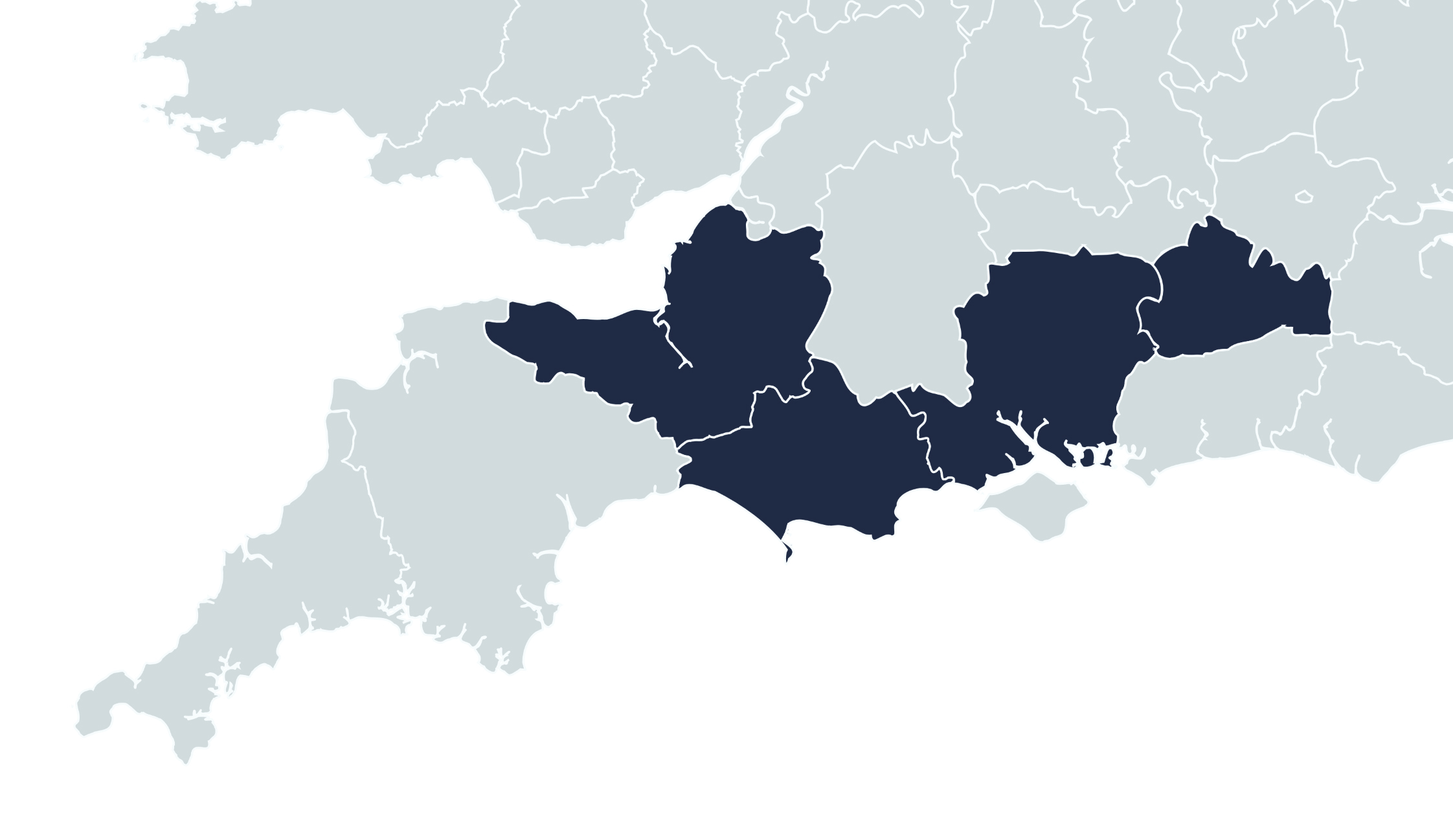
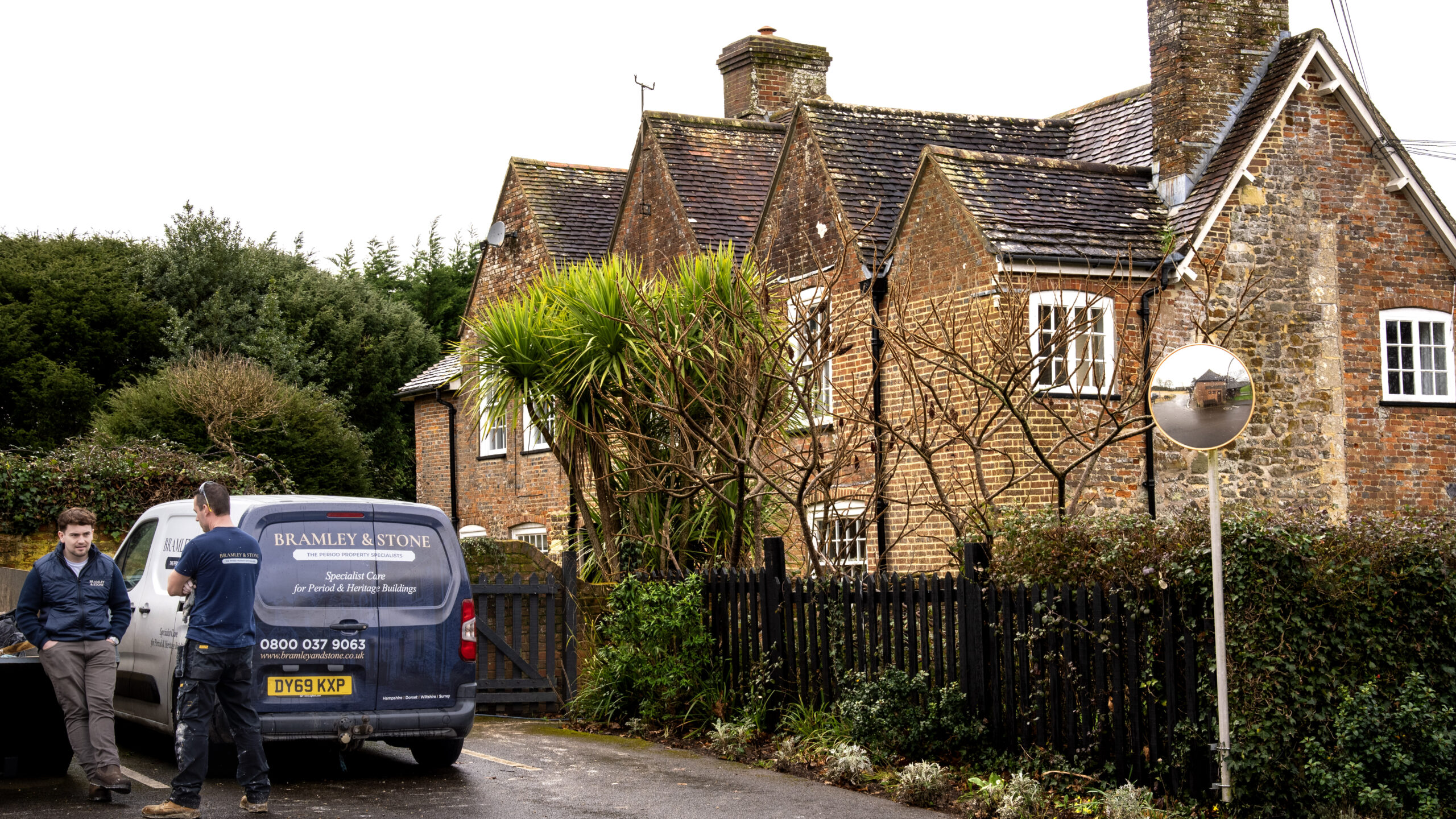
Bramley & Stone has spent over a decade caring for listed buildings across Dorset, Hampshire, Somerset and Surrey. We work routinely on Grade I and Grade II listed properties – from the Georgian townhouses of Poole’s Old Town to the medieval and Tudor properties of Sherborne and Shaftesbury, and across the conservation areas of every market town in the county.
Covering Poole, Bournemouth, Dorchester, Wimborne Minster, Blandford, Sherborne, Shaftesbury, Bridport, Weymouth, Wareham and surrounding villages
Damp in Dorset's Period Property Stock
Conservation of a listed building is fundamentally different from restoration, renovation or repair as those terms are usually understood.
Conservation prioritises the existing fabric. The aim is to maintain what’s there – the original materials, the historic detail, the patina of age – with the minimum intervention necessary to keep the building sound and functioning. Where repair is needed, it’s done in a way that’s sympathetic to what was there originally, using like-for-like materials and methods that respect the building’s age and construction.
Conservation accepts the patina of time. A listed building is meant to look like a listed building. Worn stone, weathered lime, irregular brickwork, settled timber frames – these are part of the building’s character and value, not defects to be eliminated. Good conservation work is often barely visible against the surrounding original fabric, because that’s exactly what it’s meant to be.
Conservation works with the building, not against it. Heritage buildings were constructed using methods and materials that have stood for centuries. The principles behind those methods – breathability, flexibility, sacrificial layers, regional materials – are the principles we apply to every conservation project we undertake. Conservation is not about applying modern construction techniques to old buildings. It’s about understanding why the building was made the way it was, and continuing in that tradition.
Conservation respects the legal framework. Listed buildings carry legal protection. Listed building consent is required for most works affecting their character or fabric, and the consent process specifies what materials and methods are permitted. Carrying out unauthorised work is a criminal offence, and historic mistakes – cement render, chemical injections, modern paints – may need to be removed at the owner’s expense if discovered during a future inspection. Conservation done correctly works within the consent framework and often simplifies it, because the methods are what consent typically requires anyway.
This is the methodology Bramley & Stone has been applying to listed buildings across Dorset for over a decade. It’s grounded in the SPAB approach to repair – the methodology developed and refined over more than 140 years by the Society for the Protection of Ancient Buildings, and adopted as the standard for sensitive conservation work across the UK.
The SPAB Approach to Listed Building Conservation
The SPAB approach to repair, developed by William Morris and his contemporaries in the late 19th century, has become the foundation of modern conservation practice. Its principles are simple, but applying them properly requires craft, knowledge and judgement.
Minimal intervention. Do as little as necessary, and no more. A listed building is the accumulation of centuries of decisions, repairs and changes – and every additional intervention removes some of that. The aim is always to preserve what’s there rather than replace it. Where decay has reached a point that requires action, the action should be the smallest one that addresses the problem.
Like-for-like materials. Repair and replacement should use materials matched to the original – in composition, strength, appearance, and behaviour. Lime mortar where the original was lime. Oak where the original was oak. Local stone where the original was local. Hand-finished where the original was hand-finished. This is the principle that protects the building from incompatible modern materials that damage rather than preserve.
Reversibility where possible. Interventions should ideally be reversible – capable of being undone in future without damaging the original fabric. This protects future generations of owners and craftspeople from inheriting work that has to be lived with permanently. It’s not always achievable, but it’s a principle we apply wherever the project allows.
Conservation rather than restoration. Restoration implies returning a building to some previous state – typically an idealised version of how it looked at some point in its history. Conservation accepts the building as it is now, including all the layers of its history, and seeks to maintain it. A listed Tudor cottage with Georgian additions and Victorian alterations is genuinely all of those things; conservation maintains all the layers rather than choosing which to favour.
Respect for the building’s character. Listed buildings have character that comes from age, irregularity, regional vernacular, and the marks of their previous repairs. Good conservation work doesn’t erase these qualities – it preserves them, sometimes by deliberately matching the irregularity of surviving work rather than producing a smoother, more uniform finish.
Every conservation project we undertake on a listed building in Dorset is informed by these principles. They’re not abstract – they translate directly into specifications, methods, materials and finishing decisions on site, on every project.
Dorset’s Listed Building Landscape
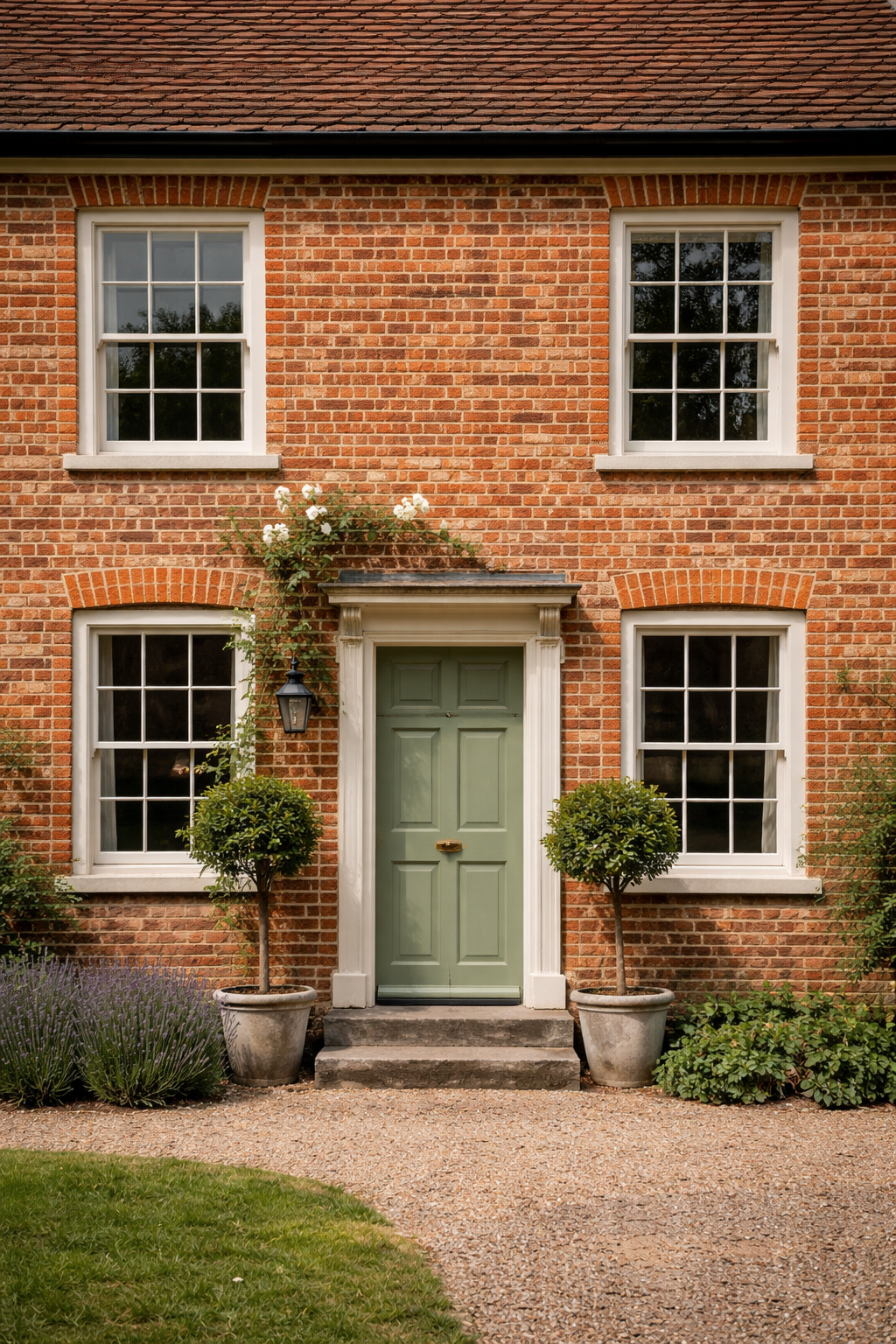
Dorset has one of the most significant concentrations of listed buildings in southern England. Over 12,000 entries on the National Heritage List for England fall within the county – spanning Grade I, Grade II* and Grade II properties, from individual cottages to entire historic streetscapes and country estates.
The listed building stock is concentrated in specific areas of the county, each with its own architectural character:
1. Penetrating damp from failed external details.
Blocked or leaking gutters, cracked downpipes, failed flashings around chimneys and parapets, raised external ground levels above the original DPC line. The first thing we look at on every Dorset survey is where rainwater is actually going. Coastal properties around Poole, Bournemouth and Weymouth are particularly affected – driven rain finds every weakness in the external envelope. Inland properties are often affected by raised drives and patios that have bridged the DPC.
Poole’s Old Town
The Georgian and Regency mercantile heart of Poole contains a substantial collection of Grade II listed buildings, with Grade II* examples on the Quay and surrounding streets. Conservation area status overlays the listing protection across much of the historic centre. The properties are typically built in handmade brick with lime mortar and lime render, with some stuccoed Regency frontages.
Sherborne
One of Dorset’s most architecturally significant towns. Sherborne’s listed building stock spans medieval, Tudor, Stuart, Georgian and Victorian construction, with Ham stone and local limestone dominating the materials palette. The town centre is a conservation area with strict controls on external work to listed properties.
Shaftesbury
Dorset’s hilltop market town carries a Grade II and Grade II* listed building density that reflects its medieval and post-medieval importance. Local greensand and limestone construction is characteristic, with extensive use of lime mortar and lime plaster throughout the older buildings.
Wimborne Minster
The medieval Minster and the streets surrounding it form a substantial conservation area with a significant collection of listed Georgian and earlier properties. Mixed brick and stone construction, lime-based throughout.
Blandford Forum
The Georgian Blandford that was rebuilt following the 1731 fire is one of the most coherent Georgian townscapes in England. The Bastard brothers’ rebuilding produced a town largely listed Grade II or Grade II*, with disciplined brick and stone elevations finished in lime.
Dorchester
The county town has a varied listed building stock spanning Roman fragments through medieval, Tudor, Georgian and Victorian construction. The older parts of the town centre are a conservation area.
The rural villages
Dorset’s listed building stock extends well beyond the towns, into villages like Cerne Abbas, Milton Abbas, Corfe Castle, Beaminster, Sturminster Newton, Cranborne and Milton Abbas, plus countless smaller settlements. Cob, thatch, lime-built construction in stone and brick is characteristic of this rural stock.
The Isle of Purbeck
Swanage, Corfe Castle and the Purbeck villages have a substantial listed building stock built in Purbeck stone with lime mortar, often with stone slate or Purbeck slate roofs.
This is the building stock our team has been working on for over a decade, and the conservation principles outlined above are applied across all of it – sympathetic, lime-based, traditional, careful.
Read the full diagnostic guide on our Damp Remediation →
Listed building consent: What Owners Need to Know
If your Dorset property is listed, listed building consent is required for almost any work that affects its character or fabric. This is a legal requirement, not a guideline, and it applies to interior as well as exterior work.
What requires consent
Consent is typically required for:
- External works affecting the building’s appearance – render, paint, pointing, roof coverings, windows, doors
- Internal works affecting historic fabric – plasterwork, panelling, fireplaces, staircases, floors, beams
- Structural alterations of any kind – new openings, partition removal, extensions
- Most repair work that goes beyond like-for-like maintenance – particularly where modern materials would be used
- Demolition or part-demolition of any part of the building
- Some works in the curtilage of the building (outbuildings, garden walls, etc.)
Routine maintenance – replacing a broken roof tile with a matching one, repointing a small area with appropriate lime mortar, repainting in the existing colour – is generally exempt. The boundary between exempt maintenance and works requiring consent isn’t always obvious, and erring on the side of caution by checking with the conservation officer is the right approach.
What consent involves
A listed building consent application is made to the local planning authority. In Dorset this is typically Dorset Council for most of the county, or Bournemouth, Christchurch and Poole (BCP) Council for the conurbation. The application includes:
- Detailed description of the proposed works
- Plans and elevations showing existing and proposed
- Method statements explaining how the work will be carried out
- Materials specifications detailing what will be used
- Heritage statement where appropriate, explaining the impact of the work on the building’s significance
- Photographs of the existing fabric and any areas to be affected
The conservation officer assesses the application against the building’s listing description, its historic significance, and broader conservation principles. They may request additional information, suggest amendments, or refuse consent where the proposed work would harm the building’s character.
Why specifications matter
The single most common reason listed building consent applications run into difficulty is inadequate or inappropriate specifications. A vague application proposing “render replacement” or “damp treatment” will typically be challenged, modified or refused. An application with detailed specifications – NHL grade, aggregate source, application method, finish, materials matching – is far more likely to proceed smoothly.
This is one of the practical reasons to use a specialist contractor familiar with the listed building process. Our specifications for listed work are written to support the consent application as well as the construction itself. We work with conservation officers across Dorset routinely and understand what they look for.
Working With Conservation Officers, Architects and Heritage Consultants
Listed building conservation rarely happens in isolation. On most significant projects, a team of professionals is involved – conservation officers from the local authority, conservation architects, heritage consultants, structural engineers experienced in historic buildings, sometimes archaeologists. The specialist contractor is part of that team.
Conservation officers
Every local authority in Dorset has a conservation officer (or a small team) responsible for assessing listed building consent applications and protecting heritage assets within the planning system. We work with conservation officers across Dorset Council and BCP Council routinely. The relationships matter – a conservation officer who knows our work and our methods is far more efficient to engage with than one who’s coming to a contractor’s submission fresh.
In our experience, conservation officers in Dorset are well-informed, technically competent, and supportive of work that follows traditional methods. The vast majority of difficulties on listed building consent applications arise from contractor specifications that don’t match what the conservation officer is looking for – not from unreasonable demands by the officer. When the specification is right, the consent process is typically straightforward.
Conservation architects
For larger projects, particularly involving alterations, extensions, or comprehensive restoration, a conservation specialist architect is often engaged by the owner. We work alongside conservation architects regularly – sometimes from their specifications, sometimes feeding into specifications they’re preparing.
A conservation architect brings design and planning expertise; we bring craft and construction expertise. The combination produces projects that are both architecturally considered and properly executed. We’re happy to be brought in early in a project to advise on construction methodology while the design is being developed, or later to deliver from a completed specification.
Heritage consultants
For projects that require a heritage statement or heritage impact assessment – particularly larger schemes, alterations to highly graded buildings, or works affecting historic interiors – a heritage consultant is often engaged. We work readily with consultants on this kind of project, providing the technical and construction input needed for the assessment.
Structural engineers
Where structural work is involved – beam repair, structural alterations, lintel replacement, foundation issues – a structural engineer with experience of historic buildings is essential. Modern structural engineering applied without sensitivity to heritage construction can produce dramatic and irreversible damage. We have working relationships with engineers across the region who understand how to work with historic structures.
Working alone
Many of our listed building projects are managed directly with the owner, without a professional team involved. This is particularly common for smaller projects – single-elevation repointing, lime plaster restoration in one or two rooms, limited render replacement. In these cases we handle the consent application and conservation officer liaison ourselves, preparing specifications and method statements to support the application.
The conservation Work We Carry Out on Listed Buildings
Across the listed building projects we undertake in Dorset, the work typically falls into the following categories:
Lime Mortar Repointing
The single most common conservation intervention we carry out on listed buildings. Original lime pointing weathered back, cement repointing causing damage, or mixed pointing requiring restoration to consistency. We match the original mortar in composition, strength, aggregate and finish – sampling and analysing surviving original where it’s accessible.
Lime Plaster Restoration
Internal lime plaster reinstatement, gypsum strip-and-restore, lath-and-plaster repair, lime putty work on older properties where non-hydraulic systems are appropriate. We use locally-sourced materials where regional matching matters – including hair-reinforced lime plasters in the traditional manner.
Lime Render Replacement and Restoration
External three-coat lime render systems, harled, floated and trowelled finishes appropriate to the property’s age and character. Cement render removal where required as the first step. Finished with limewash or breathable mineral paint systems.
Cement Render Removal
A specialism in itself. Carrying out the careful, hand-led removal of cement render from heritage masonry without further damaging the substrate beneath. Often the necessary first step before lime systems can be reinstated.
Heritage Timber Repairs
Sympathetic repair of historic timber – frames, lintels, beams, joists, oak structural members. Scarf jointing, like-for-like oak insertion, traditional joinery where the original detail is being preserved. Replacement of failed modern repairs with appropriate historic work.
Sympathetic Structural Alterations
New openings, partition adjustments, beam replacements where structural work is genuinely needed. Carried out with structural engineers experienced in historic buildings, with the conservation officer engaged from the outset, and using methods that respect the building’s existing structural character.
Damp Diagnosis and Remediation
Diagnostic damp work on listed properties – identifying the actual cause and remediating through breathable systems rather than chemical or impermeable interventions. Consent-friendly methods throughout.
Fabric Repair and Stabilisation
Stone replacement and indenting where the original has eroded beyond repair. Brick replacements matched to the original. Repair of decorative elements – plinths, copings, mouldings – using traditional methods and matched materials.
Historic Limewash and Decorative Finishes
Limewash application in matched historic colours, silicate mineral paint where appropriate, traditional decorative finishes where the building requires them. Removal of inappropriate modern paint systems that are preventing the building from breathing.
Book a Heritage Damp Survey — Call 01202 144776
Why a Specialist Contractor Matters For Listed Building Work
Listed building work is not the same as general building work. The differences are substantial, and they’re worth setting out clearly because they translate directly into outcomes.
The materials are different. Lime mortar, lime plaster, lime render, hand-made brick, sourced stone, oak, limewash, silicate paint. A specialist contractor stocks, sources and works with these materials as standard. A generalist contractor doesn’t, and substitutes – usually with modern equivalents that damage the building.
The methods are different. Lime work requires the right weather window, the right curing protection, the right number of coats with appropriate intervals between them. Hand removal of cement, careful joint raking, matched aggregate, traditional finishing techniques. A specialist contractor builds these methods into project planning and pricing. A generalist contractor either skips them or fails them.
The diagnostic approach is different. A specialist contractor looks at a building to understand it – what it’s made of, how it was built, what it needs. A generalist contractor looks at a problem and applies their default solution to it. On a listed building, the default solution is almost always wrong.
The consent experience matters. A specialist contractor is familiar with the listed building consent process, knows what conservation officers look for in specifications, and can prepare method statements that support successful applications. A generalist contractor unfamiliar with the process often produces submissions that get challenged, amended or refused.
The team matters. A specialist contractor has directly-employed craftspeople trained in heritage methods. A generalist contractor often subcontracts heritage work to whichever team is available, with variable quality and no guarantee of specialist training.
The liability matters. Inappropriate work on a listed building is a legal risk for the owner – particularly where it’s discovered during a later inspection or sale. A specialist contractor protects the owner by working only to consent and using appropriate materials. A generalist contractor exposes the owner by applying modern materials that may need to be removed at the owner’s expense in future.
This is why we work exclusively on heritage and listed properties. Listed building conservation is what we do – not one service line among many, but the foundation of the business.
Our Process For Listed Building Conservation Projects
Every listed building project we undertake follows the same process, calibrated to the specific property, the scope, and the professional team involved:
Step one – Initial Conversation
A phone call or written enquiry to understand the property, the listing grade, the scope being considered, and the wider context – whether you’re working with an architect, whether consent is already in place, whether the project is part of a phased programme.
Step two – A Heritage Damp Survey.
A specialist surveyor visits the property and assesses the building. For listed work this involves a detailed examination of the historic fabric, the existing condition, any previous interventions, the materials and methods of the original construction, and the specific scope being considered. Where appropriate, we sample surviving original mortars, plasters or renders to inform matching specifications.
A heritage survey on a listed building typically takes 2–3 hours on site, occasionally longer for larger or more complex properties. There is a fee for the survey reflecting the time and specialist expertise involved.
Step three – Written Report and Quotation
A written report sets out what we found, what we recommend, and the materials and methods we propose to use. For listed work, the specification is detailed enough to support a consent application – NHL grades or lime putty as appropriate, aggregate specifications, application methods, curing requirements, finishes, matching evidence.
The quotation that accompanies the specification is itemised and specific. You see exactly what you’re investing and what’s included.
Step Four – Consent Application (where required)
Where listed building consent is required and not already in place, we can prepare specifications and method statements to support your application. Some owners prefer to handle consent applications themselves; others ask us to liaise directly with the conservation officer on the technical aspects. Either approach is workable.
Step Five – The Work
Once consent is in place (where required) and you’ve agreed to proceed, we schedule the project around the appropriate weather window. Our team – directly-employed, trained in heritage methods, supervised on every project – carries out the work to the specification. Daily clean-down, regular check-ins, photographic record-keeping throughout.
Step Six – Completion and Aftercare
On completion, qualifying works are backed by our 10-year workmanship promise. For lime work particularly, we’ll often return for limewashing or breathable paint finishing in the appropriate weather window after cure is complete, ensuring the building’s external finish is correctly applied.
For listed properties, we typically keep a photographic record of the works for owners who want documentation for their own records or for future sale.
Book a Heritage Damp Survey — Call 01202 144776
Recent Listed Building Work
We’ve published detailed case studies of recent projects on Grade II listed properties and properties in conservation areas:
Lime restoration on a stone cottage near Montacute – Cement removal, lime putty replastering and matched lime pointing on an 18th-century Ham stone cottage in a conservation area near Montacute. Original horsehair plaster found beneath the cement; locally-sourced horsehair used in the replacement mix. Read the full case study →
Lime rendering on a Georgian property in Hook – Three-coat NHL 2 lime render with pozzolanic addition on a Georgian property in a Hampshire conservation area. Cement render removed, extensive brick repairs to address damage caused by the previous cement, structural lintel replacement. Read the full case study →
These are representative of the conservation work we undertake – careful diagnosis, matched materials, methods that preserve rather than replace, and outcomes that perform for generations rather than years.
Lime Restoration on a Stone Cottage Near Montacute
Cement removal, lime putty replastering and matched lime pointing on an 18th-century Ham stone cottage in a conservation area near Montacute. Original horsehair plaster found beneath the cement; locally-sourced horsehair used in the replacement mix.
Lime Rendering on a Georgian Property in Hook
A specialist surveyor visits the property and assesses the building. For listed work this involves a detailed examination of the historic fabric, the existing condition, any previous interventions, the materials and methods of the original construction, and the specific scope being considered. Where appropriate, we sample surviving original mortars, plasters or renders to inform matching specifications.
A heritage survey on a listed building typically takes 2–3 hours on site, occasionally longer for larger or more complex properties. There is a fee for the survey reflecting the time and specialist expertise involved.
These are representative of the conservation work we undertake – careful diagnosis, matched materials, methods that preserve rather than replace, and outcomes that perform for generations rather than years.
Book a Heritage Damp Survey — Call 01202 144776
Areas of Dorset We Cover
We carry out damp remediation across the whole of Dorset:
South Dorset and the coast – Poole, Bournemouth, Christchurch, Weymouth, Portland, Swanage, Wareham, Wool, Lulworth, Studland and the surrounding coastal villages.
East Dorset – Wimborne Minster, Ferndown, Verwood, Cranborne, Three Legged Cross and the villages of Cranborne Chase.
North and central Dorset – Blandford Forum, Sturminster Newton, Sherborne, Shaftesbury, Gillingham, Stalbridge and the villages across the Blackmore Vale.
West Dorset – Dorchester, Bridport, Lyme Regis, Beaminster, Cerne Abbas, Piddletrenthide and the wider rural west of the county.
The Isle of Purbeck – Swanage, Corfe Castle, Wareham, Studland and the Purbeck villages.
If your Dorset village isn’t listed, please get in touch – we cover the whole county.
Frequently asked questions
How do I know if my property is listed?
Listed status is recorded on the National Heritage List for England, which is searchable online via the Historic England website. Your property’s entry will show the listing grade (I, II* or II), the date of listing, and a description of what is protected. Your local authority planning department can also confirm status and provide additional information.
What’s the difference between Grade I, Grade II* and Grade II?
Grade I properties are of exceptional national interest – about 2.5% of listed buildings. Grade II* (“two-star”) are particularly important buildings of more than special interest – about 5.8% of listed buildings. Grade II properties are of special interest, warranting every effort to preserve them – about 91.7% of listed buildings. The principles of conservation apply across all grades; the scrutiny of consent applications is generally higher for higher grades.
Do I need consent for internal work on my listed building?
Usually yes, if it affects historic fabric – original plasterwork, panelling, fireplaces, staircases, beams. The whole building is listed, not just the exterior, and interior features can be just as protected. Routine redecoration with appropriate materials is generally exempt; anything beyond that typically requires consent.
Can I just repaint or repoint my listed building without consent?
For straightforward redecoration with appropriate materials, no consent is usually needed. For repointing, the position is more nuanced – repointing in lime mortar matched to the original, on a small area, is often treated as routine maintenance, while a full elevation repoint typically requires consent. If you’re unsure, a conversation with the conservation officer or a specialist contractor is the right starting point.
How long does listed building consent take?
Typically 8-13 weeks for a straightforward application, longer for more complex schemes or where additional information is requested. Allow this in your project planning – work that requires consent cannot legally proceed until consent is granted.
How much does listed building conservation work cost in Dorset?
It varies enormously with scope. A focused single-room lime plaster restoration may run in the low thousands. Full external lime rendering of a substantial Georgian property runs into the tens of thousands.
omprehensive multi-elevation restoration of a Grade II property can exceed £100,000 depending on scale. We provide a specific written quotation after the heritage survey so you know exactly what you’re investing.
Will conservation work add to or protect my property’s value?
In our experience, well-executed conservation work using appropriate materials protects and often enhances the property’s value, particularly when documented for future sale. The opposite – cement render, gypsum on lime, chemical injections, modern paint systems – increasingly raises red flags during pre-purchase surveys and can affect mortgage valuations on listed properties. Buyers in the heritage market are increasingly informed, and they look for evidence that work has been done correctly.
Do you work on Grade I listed buildings?
Yes – though Grade I work is relatively rare in our practice given the number of Grade I properties (about 2.5% of all listings). The principles and methods we apply are consistent across all grades, but Grade I projects typically involve a larger professional team and more detailed documentation throughout. We’re set up for this work and have undertaken it.
Are you insured?
Yes – Bramley & Stone holds public liability insurance up to £5 million. Insurance and indemnity details can be provided on request before any work begins.
Are you SPAB members?
We follow the SPAB approach to repair as our core methodology. The SPAB (Society for the Protection of Ancient Buildings) approach – minimal intervention, like-for-like materials, reversibility where possible, conservation rather than replacement – is the framework we apply to every heritage project, including listed building work. Our approach is aligned with SPAB principles whether the property is listed or unlisted.
Read the full diagnostic guide on our Damp Remediation →
Start with a heritage damp survey in Dorset
If your Dorset period property has damp that keeps returning, or you suspect previous work has made it worse, the first step is a proper diagnostic survey. Tell us about your property and we’ll arrange the right type of assessment.
Heritage specialists across Poole, Bournemouth, Dorchester, Wimborne, Sherborne, Shaftesbury, Blandford, Bridport, Weymouth and the wider county. 1,500+ period properties restored.