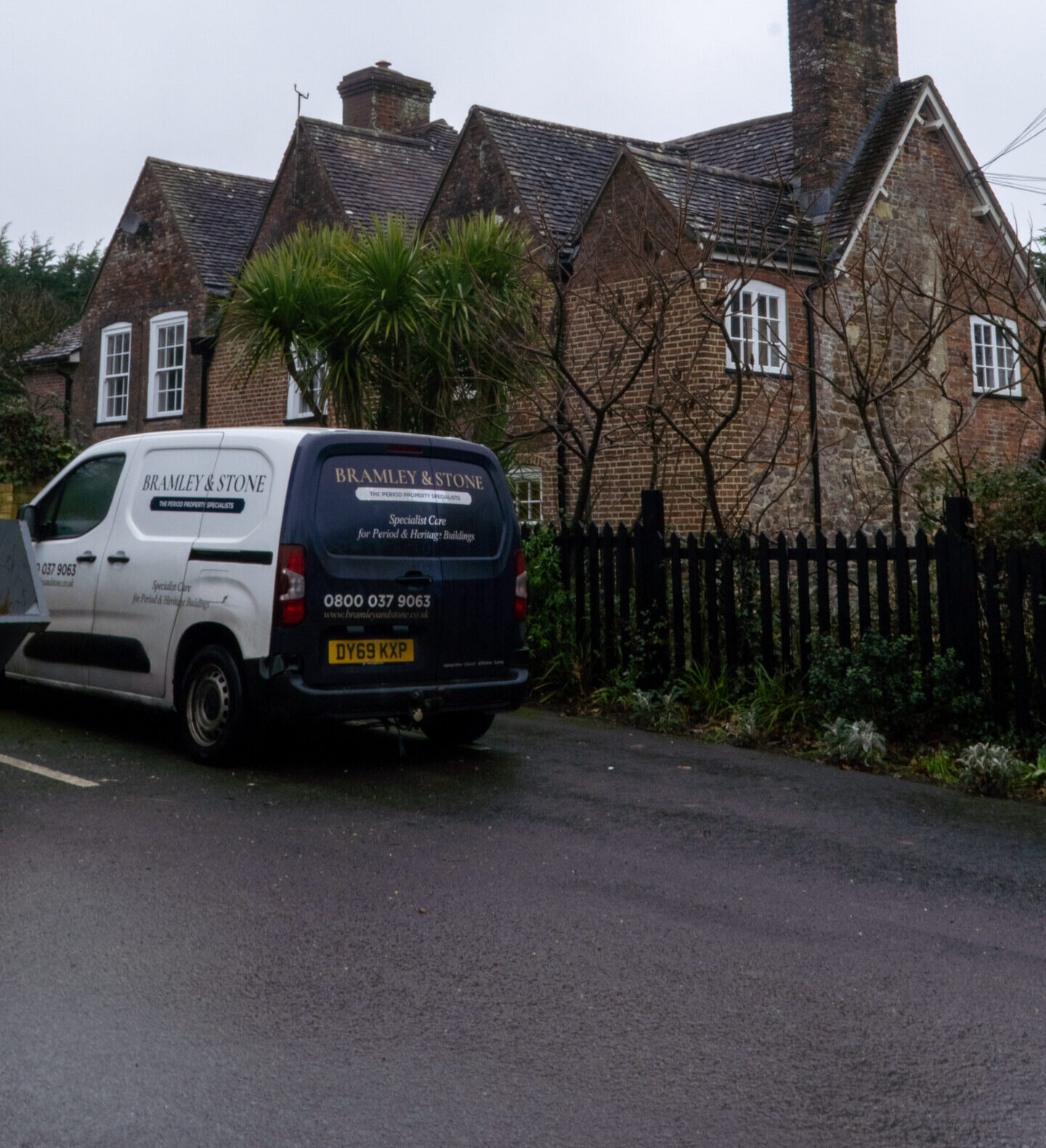
Damp Specialists for Period & Listed Properties
The damp has come back. Or it never truly went away. You’ve had it “treated” before , perhaps more than once, and the patches, the smell and the cold walls are still there. Something isn’t right, and you already suspect the last contractor didn’t understand your building.
You’re in the right place.
Bramley & Stone are heritage damp specialists. We work exclusively on period and listed properties across Dorset, Hampshire, Somerset and Surrey. We diagnose the real cause of damp in old buildings and remediate it using the breathable, traditional materials these buildings were designed to work with.
1,500+ period properties assessed and restored · SPAB-aligned approach · 10-year workmanship promise on qualifying works
If the Damp Keeps Coming Back, You're Not Unusual
Most of the clients who call us have already tried to fix their damp. They’ve had a damp proofing company visit, a chemical damp proof course injected, waterproof render applied to the external walls, or internal tanking installed to “seal” the problem. The work came with a guarantee. The damp came back anyway.
This is not bad luck, and it is not your fault. It happens because the standard approach to damp – the one used by the vast majority of damp proofing companies in the UK – was designed for modern buildings with cavity walls and impermeable construction. It was not designed for the building you own.
Period properties, typically anything built before 1919, and often much older – were constructed using lime mortars, lime plasters, solid walls and natural ventilation. They were designed to manage moisture through movement and evaporation. When you interrupt that system with modern materials, moisture has nowhere to go. It finds another route, it collects behind the surface, and eventually it reappears somewhere else.
The first thing we do when we arrive at your property is listen to what has already been tried. The second thing we do is look at the building and work out what it’s actually telling us.
Why Damp Behaves Differently in Heritage Buildings
A modern house is built to keep moisture out. Cavity walls, damp proof courses, impermeable renders, plastic membranes, gypsum plasters – the whole system is designed on the principle that water should never get in, and if it does, it should be sealed behind something waterproof until it can be removed.
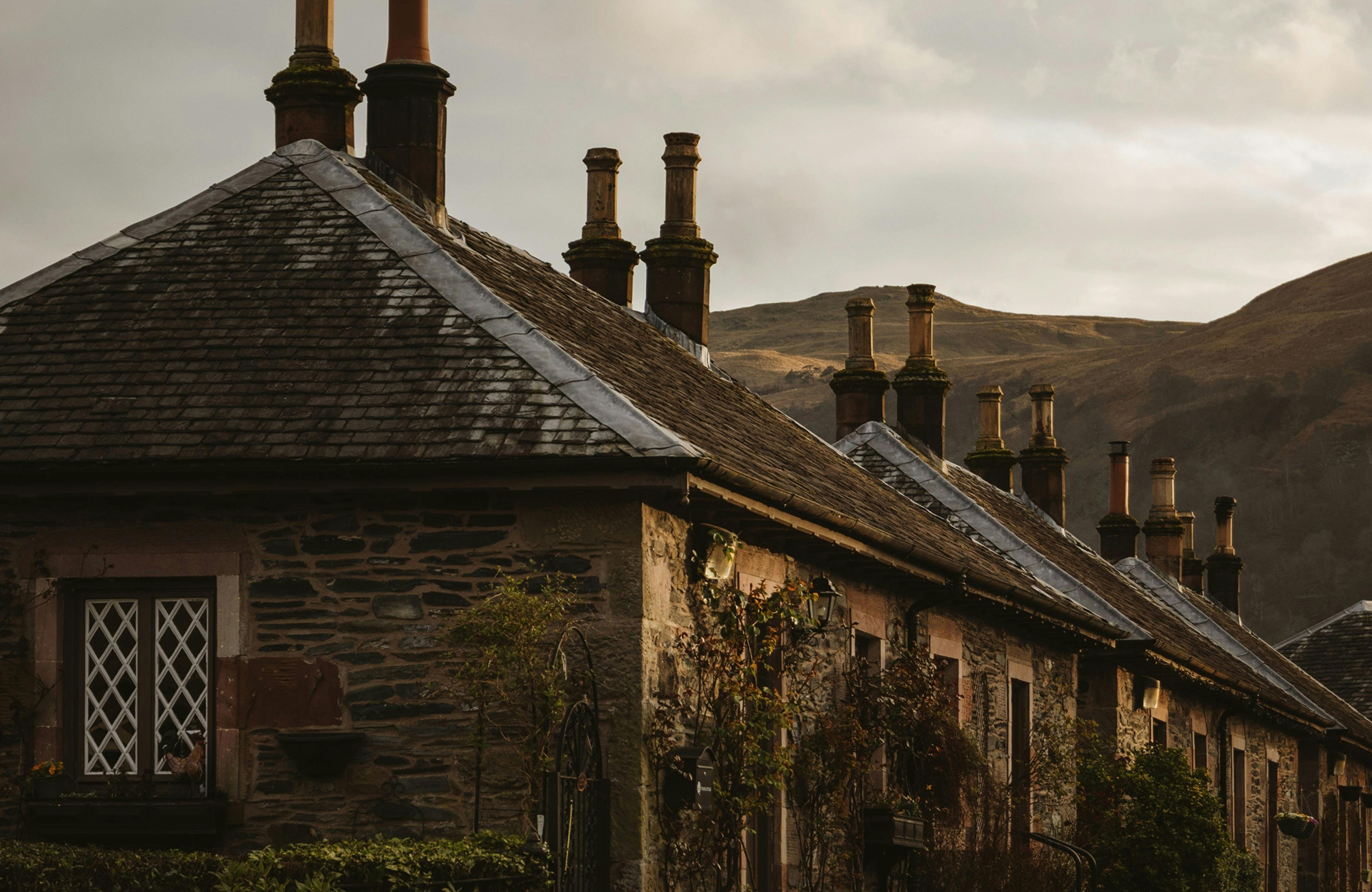
A pre-1919 house does the opposite. It is built to let moisture in and let moisture out. Solid stone or brick walls absorb a small amount of water from driving rain or ground contact, and then release it back into the air as the weather changes. Lime mortar and lime plaster are porous and vapour-permeable, which means water vapour moves freely through them. Timber floors over ventilated sub-floor voids allow air to circulate beneath the building. Chimneys, sash windows, suspended floors and unsealed roof voids all contribute to a continuous flow of air through the structure.
This is not a flaw. It is the design. These buildings have lasted 150, 300, sometimes 500 years precisely because they manage moisture through breathability, not by trying to stop it.
The problem begins the moment someone treats a heritage building as if it were a modern one. Cement pointing replaces decayed lime mortar joints. A cement render is applied to the outside of a cottage “to stop the rain getting in”. Internal walls are stripped of lime plaster and skimmed with gypsum. A damp proof course is injected into solid nine-inch walls. Each intervention seems sensible on its own. Together, they turn a building that was designed to breathe into one that can no longer manage its own moisture.
The moisture doesn’t disappear. It gets trapped. And then it makes itself known – as blown plaster, salt staining, a persistent musty smell, rooms that never feel warm, and damp patches that always return.
The Five Real Causes of Damp in Period Properties
True rising damp – the kind sold by high-street damp proofing firms as the default diagnosis – is far less common in old buildings than the industry suggests. In over 1,500 period properties our team has assessed, the cause of the damp has almost always fallen into one of five categories. None of them are solved by a chemical injection.
1. Penetrating damp from failed external details.
Blocked or leaking gutters. Cracked downpipes. Flashings that have failed around chimneys and parapets. Bridged cavities where insulation has been poorly installed. External ground levels that have been raised over the decades until they sit above the original damp proof course. A rendered plinth that bridges the DPC and draws water up the face of the wall. The first thing we look for, every time, is where rainwater is actually going – because in most heritage damp cases, that is where the problem starts.
2. Cement render and pointing trapping moisture inside the wall.
This is probably the single most common cause of stubborn internal damp we encounter. A cement render or a cement repoint, applied at some point in the last seventy years to “weatherproof” the building, traps moisture inside the masonry. The wall can no longer release the small amounts of water it was designed to manage. That moisture pushes inward instead, emerging as damp patches, blown plaster and salt staining on the internal face. Removing the cement and restoring lime is often the single most effective intervention we make.
3. Internal tanking and waterproof plaster systems.
Properties that have had basement tanking, cementitious waterproof render or impermeable membrane systems applied internally tell the same story. The surface of the wall looks dry for a period of time, but moisture is accumulating behind it. Eventually the damp emerges above the tanked line, or the render itself fails as salts build up behind it. We remove failed tanking carefully and reinstate a breathable lime system that lets the wall dry naturally.
4. Condensation misdiagnosed as rising damp.
Cold internal surfaces, poorly ventilated rooms, blocked airbricks, sealed-up chimneys and the loss of traditional ventilation all contribute to condensation. In many cases, what looks like rising damp at the base of a wall is in fact condensation forming on a cold surface and running downward. A chemical injection will not fix it. Restoring ventilation, warming the wall fabric and addressing humidity will.
5. Subfloor moisture from blocked ventilation.
Timber ground floors in period properties sit over a ventilated void, with airbricks around the perimeter of the building. When those airbricks are blocked, rendered over, or buried by raised ground levels, the void stops venting. Moisture accumulates beneath the floor, timbers begin to decay, and damp rises into the lower part of the ground floor walls. The fix is to restore ventilation – not to seal the floor.
In almost every case we survey, one or more of these five is the real cause. Chemical damp proof courses target a problem – true capillary rising damp through solid masonry – that is far rarer than the industry presents it to be. When the real cause is correctly identified, the real remediation is almost always simpler, cheaper and more durable than another round of injections and tanking.
Why Standard Damp Treatments Fail on Old Buildings
Before we explain what we do, it’s worth being specific about what the wider damp proofing industry does, and why these approaches fail when applied to heritage buildings.
Chemical damp proof course injection
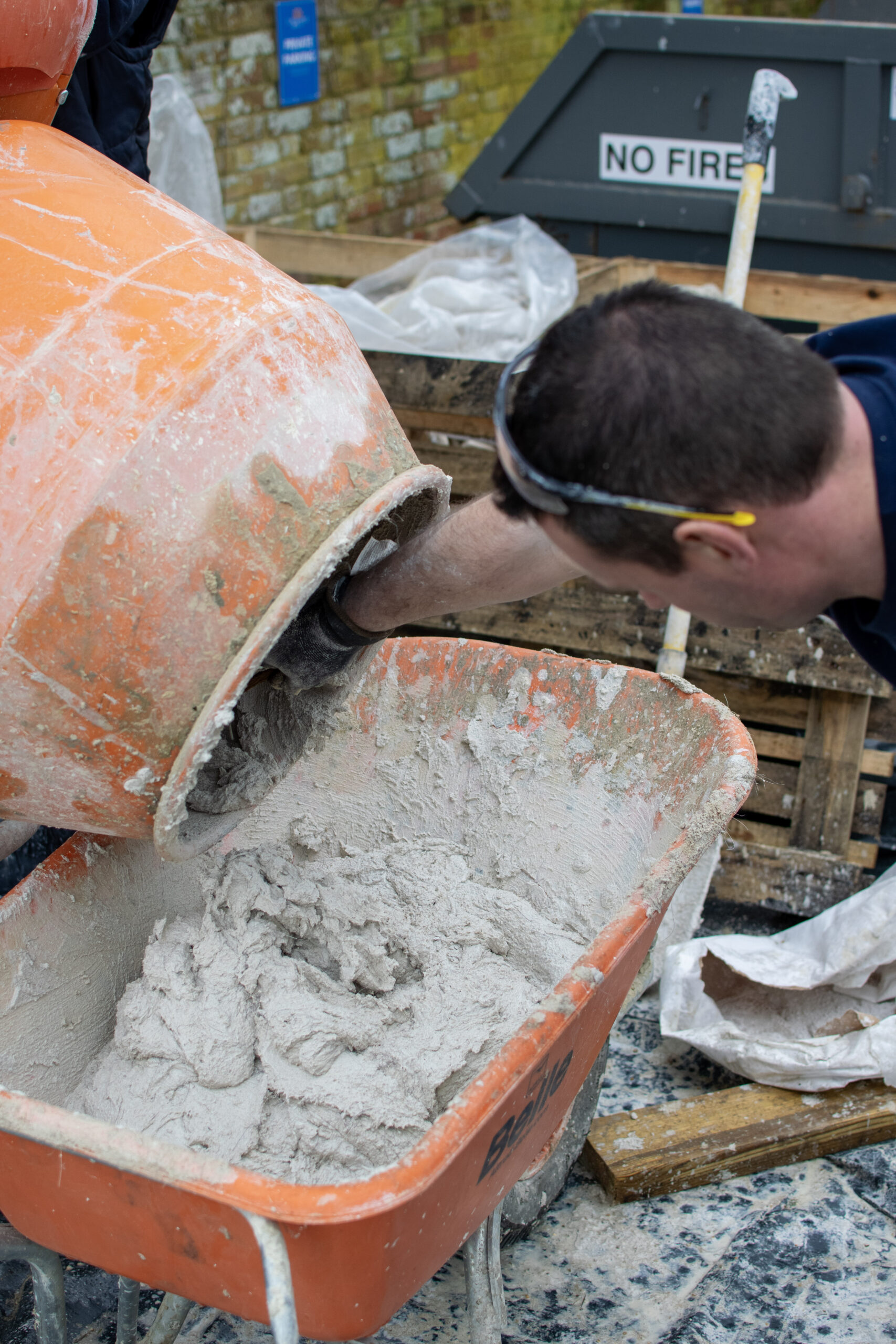
A chemical water repellent – usually a silane or siloxane cream – is injected into a horizontal line of holes drilled along the base of a wall. The theory is that the chemical forms a continuous barrier that stops moisture rising through capillaries in the masonry. In practice, old walls are not homogeneous: they contain rubble cores, irregular bedding, variable mortar and pockets of voids. A continuous chemical barrier in such a wall is extremely difficult to achieve. More importantly, in most cases there is no true rising damp to stop – because the real cause is something else entirely. The injection addresses a problem that is usually not present, and leaves the actual cause untouched.
Waterproof cement render and tanking
Waterproof cement render and tanking. Applied externally or internally, these systems attempt to seal moisture out of, or into, the wall. On a cavity-built modern house this can work. On a solid-walled heritage building, the sealed face prevents the wall from releasing moisture. The moisture accumulates until it finds another exit – usually above the line of the render or tanking, or by forcing the surface to fail as crystallised salts push the finish away from the masonry.
Gypsum plaster applied directly over lime
Modern gypsum plaster and plasterboard skim are vapour-resistant and sit against the wall as a barrier. When moisture moves from the inside of the wall toward the room, it cannot pass through the gypsum to evaporate. It collects behind the plaster. The plaster blows, falls away or holds salt staining on its surface. It is one of the most common things we strip away on a damp remediation job.
Cement pointing on lime-built masonry
Cement is harder, less flexible and less breathable than the stone or brick it sits between. When lime joints are repointed with cement, the wall loses its primary route for moisture to evaporate. The softer masonry is forced to release moisture across its face instead, which accelerates erosion of the stone or brick itself. In some cases the damage is irreversible.
None of these approaches are wrong per se. They are simply wrong for the building. Applied to a modern cavity wall house they may work perfectly well. Applied to a 200-year-old cottage, they do more harm than good – and guaranteed work that fails within a few years is a very expensive way to learn that.
The Word We Don't Use
You’ll notice we don’t talk about “damp treatment”. We remediate, we repair, we restore, we remove. We don’t treat.
That distinction matters to us. A treatment is something applied to a symptom – a cream, an injection, a coating. The problem with treating damp is that it assumes the damp is the illness. In a heritage building, the damp is almost always a symptom of something else: a bridged DPC, a cement render, a blocked airbrick, a failed flashing. Treat the symptom and you leave the cause in place. The damp comes back.
Remediation is different. Remediation means identifying the cause and addressing it at source. It means removing the cement that’s trapping moisture, restoring the lime that allows the wall to breathe, reopening the ventilation path that was sealed up in 1982. It is slower, it is more considered, and it lasts.
When we say we don’t treat buildings, it’s because we’re not interested in selling you a short-term fix. We’re interested in doing the work correctly, once, so you don’t have to think about the damp in your home again.
What Correct Damp Remediation Looks Like in a Heritage Property
Every heritage property is different, but the process is the same. We work to a four-stage approach, and we don’t shortcut any of it.
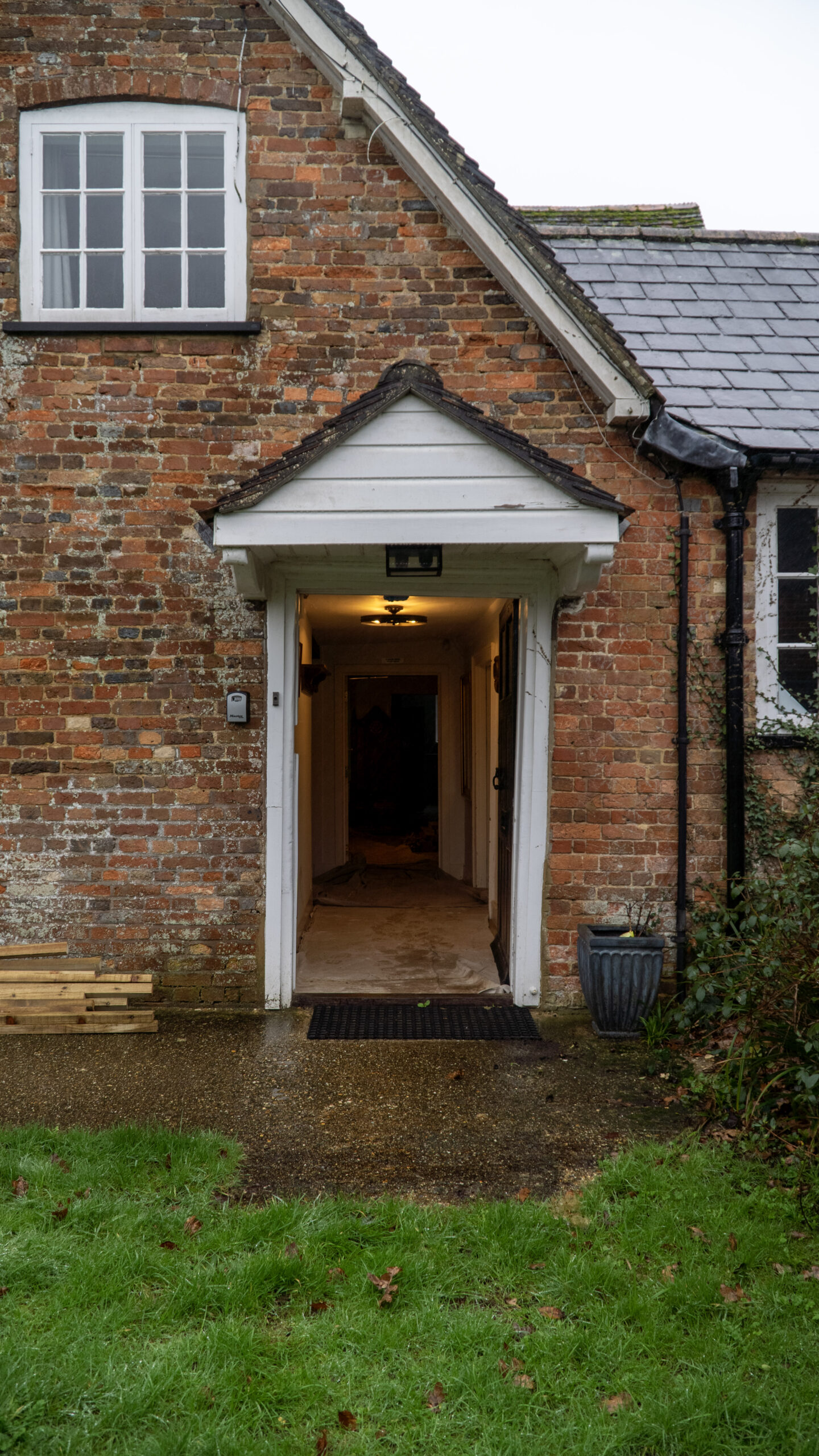
Heritage Survey. A specialist surveyor spends time at the property – internally and externally – and assesses the fabric of the building. We look at construction type, wall build-up, existing finishes, ground levels, guttering and external details, ventilation paths, sub-floor voids, evidence of previous repairs and interventions, and the specific pattern of damp you’re experiencing. Where appropriate, we use moisture meters, thermal imaging and calcium carbide testing to establish what we’re dealing with. The survey is diagnostic, not promotional. We are trying to work out what is actually wrong with the building before we recommend a single thing.
Written report and clear specification. You receive a written report in plain English that sets out what we found, what we believe is causing the damp, and what we recommend. If we think a previous contractor’s work is making things worse, we say so and explain why. If we think the problem is smaller than you feared – sometimes it is – we say that too. The quotation that accompanies the report is specific: what work, in what order, using what materials, to what standard. No generic line items, no vague “damp treatment” pricing.
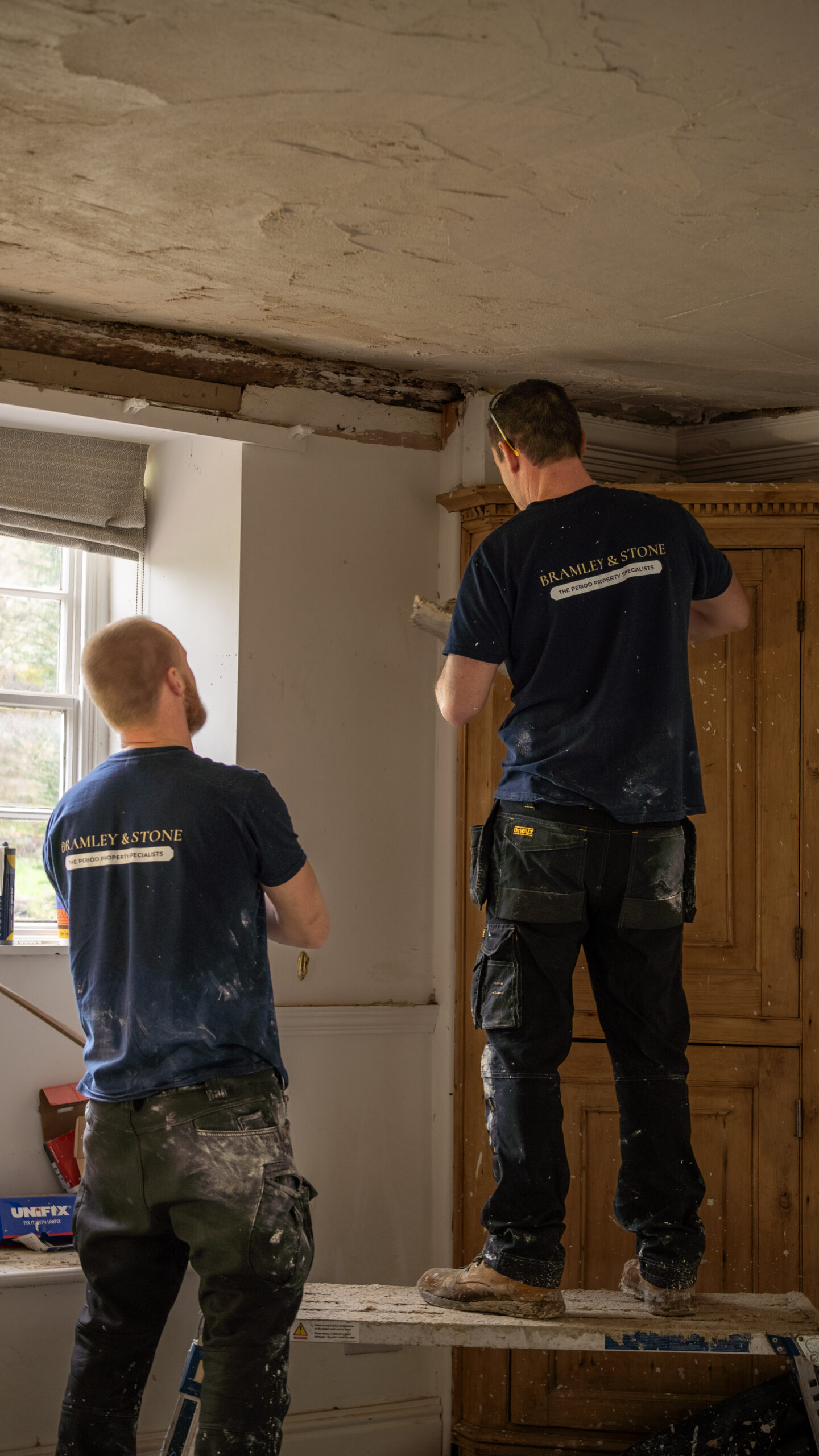
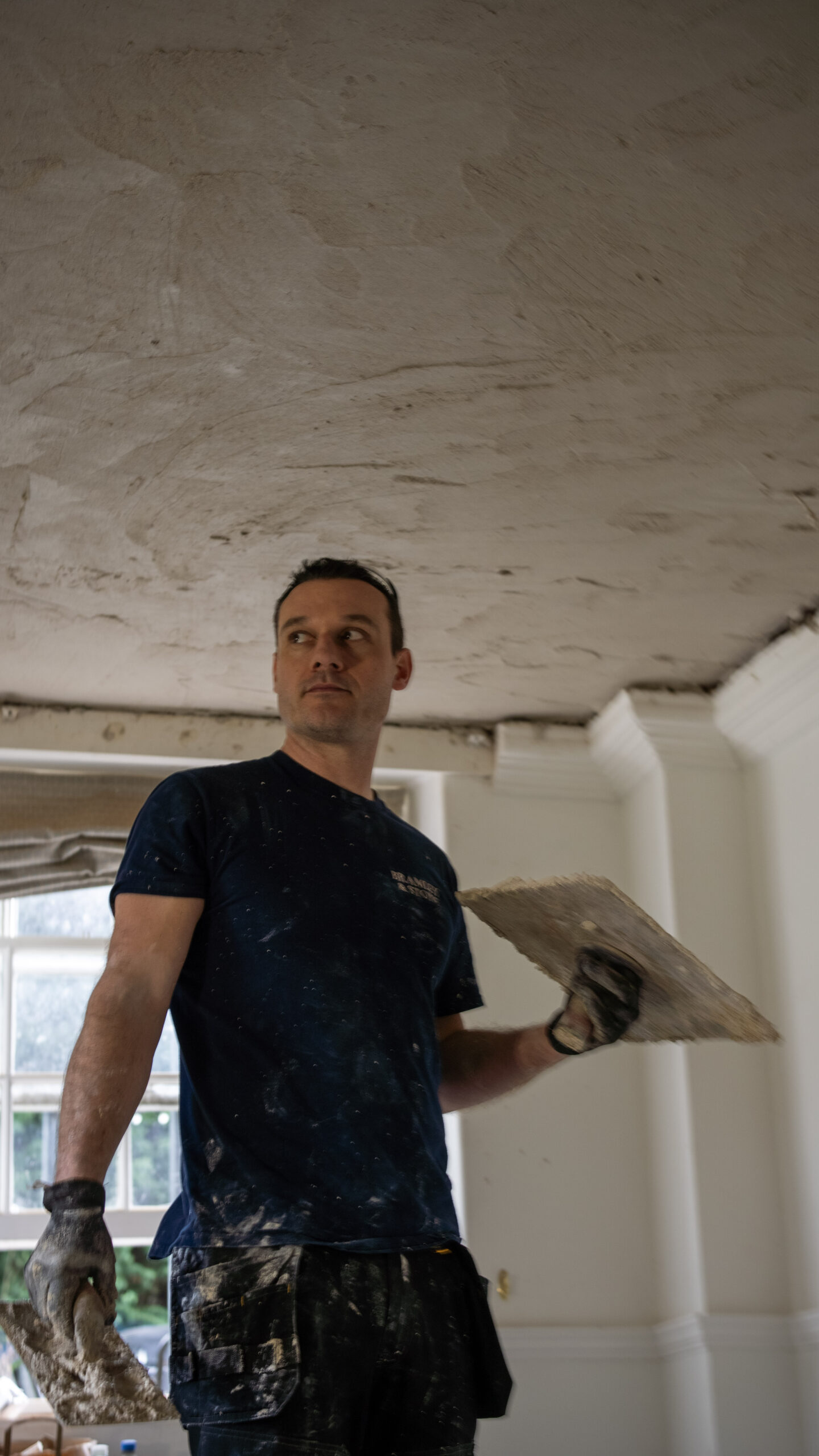
Traditional remedial works. If you go ahead, our team carries out the specified work using appropriate materials – lime mortar, lime plaster, lime render, hemp or wood fibre insulation where required, limewash or silicate paint finishes. We remove failed cement, failed gypsum and failed tanking where they are contributing to the damp. We restore ventilation. We address external details – gutters, ground levels, flashings – where they are part of the cause. The work is carried out by our own directly-employed team leaders and trained operatives. We don’t sub this work out.
Long-term protection. What you are left with is a building that can manage moisture the way it was designed to. The walls breathe, the surfaces stay dry, the rooms feel warmer, and the damp doesn’t come back – because the cause has been removed, not sealed over. Qualifying works are backed by our 10-year workmanship promise.
Real Dorset Damp Projects
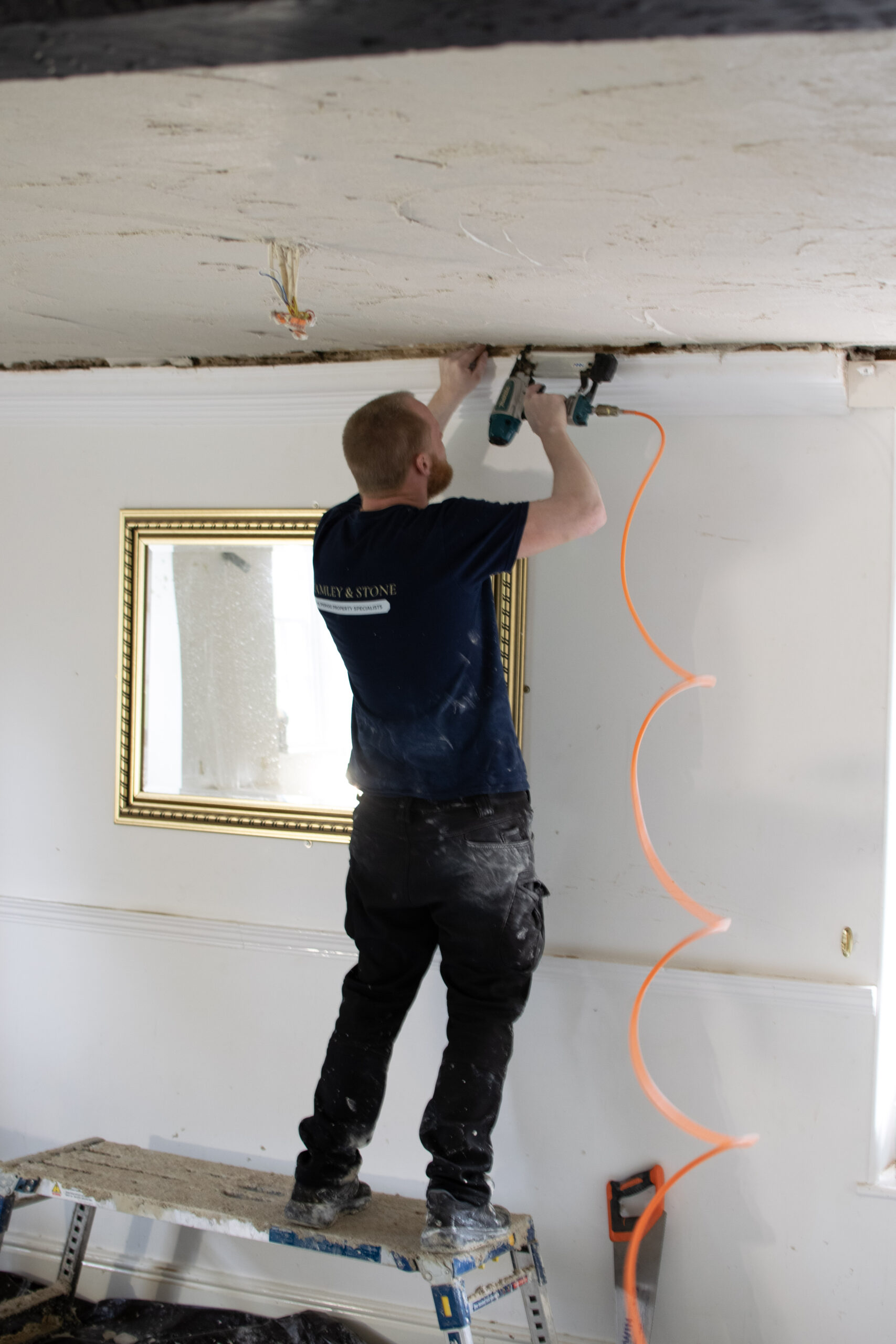
A Georgian townhouse, Poole – three failed treatments before us. A Grade II Georgian townhouse in Poole’s Old Town. The owners had had three previous damp treatments over a decade – chemical injection, internal tanking, and a renewed chemical injection. The damp returned each time. On survey, the actual causes were a cement render applied externally during the 1970s, a bridged DPC from a raised pavement at the rear of the property, and gypsum plaster internally that was preventing the walls from drying. Remediation involved removing the cement render and lime re-rendering, reducing external ground levels at the rear, removing the failed tanking and gypsum internally, and three-coat lime plastering the affected walls. The damp has not returned in two and a half years.
A cob cottage, Marshwood Vale – chemical injection on cob. A small cob and thatch cottage in west Dorset. The previous owner had been sold a chemical damp proof course by a national damp proofing firm. On a cob property, chemical injection achieves nothing – there’s no continuous capillary structure for the chemical to interact with, and the actual cause of damp in cob is invariably trapped moisture from inappropriate materials. Survey identified extensive softening of the cob behind a layer of modern plaster, plus failed external limewash that needed reinstating. Remediation involved removing the modern internal plaster carefully, monitored drying of the cob, fibre-reinforced lime plaster reinstated internally, and external limewash applied in a tone matched to surviving evidence. The cottage has stabilised.
An Edwardian villa, Bournemouth – condensation misdiagnosed as rising damp. A buyer of an Edwardian villa in Bournemouth had received a surveyor’s report flagging “rising damp” at the base of several internal walls. Our assessment identified the real cause as severe condensation – the property had been heavily draught-proofed by the previous owner, original airbricks had been painted over, two chimneys had been capped solid, and the gypsum-skimmed walls were cold surfaces on which moisture was condensing. No chemical injection was required. Remediation involved reinstating subfloor ventilation, uncapping two chimneys with appropriate cowls, replacing gypsum plaster with lime on the worst-affected walls, and a conversation about ventilation routines. The “rising damp” never returned, because it had never been rising damp.
The Materials We Use And Why
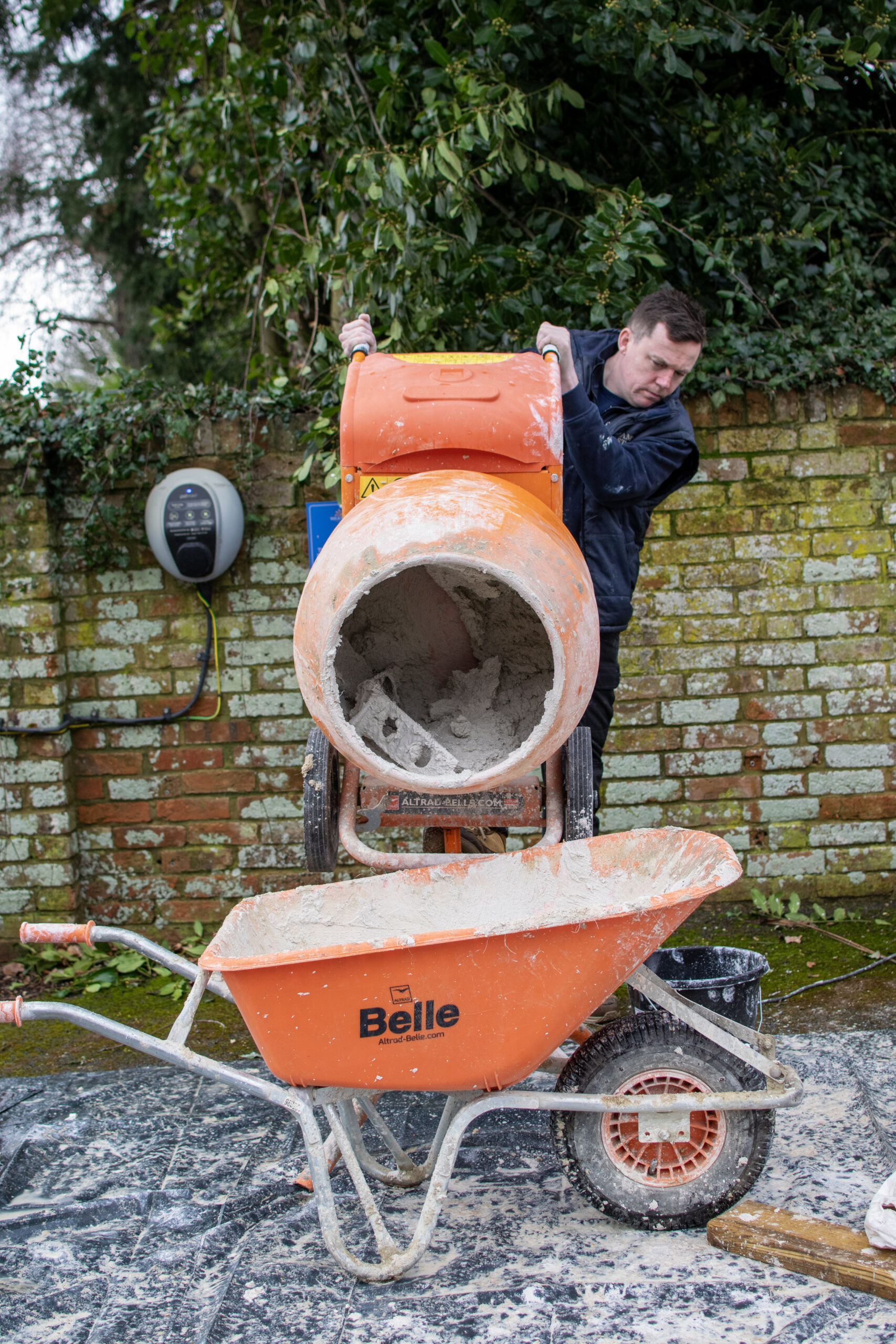
Every remediation specification we produce is built around materials that are appropriate to the age and construction of your property. In practical terms, that means:
Lime mortar for repointing, bedding and structural repairs – matched to the original in composition, strength and finish. We use both hydraulic limes (NHL 2, NHL 3.5, NHL 5 where appropriate) and non-hydraulic lime putty mortars depending on the application, the exposure and the original build.
Lime plaster for internal finishes – typically a three-coat lime plaster on masonry, or a lath-and-plaster system for internal partitions and ceilings where the original specification requires it. Finished with limewash or a breathable mineral paint.
Lime render for external walls – again in three coats, with a harl or float finish depending on the property. Sometimes tinted with natural pigments, often finished in limewash.
Natural insulation where required – wood fibre, hemp lime or cork board on internal walls where thermal performance needs to be improved without compromising breathability.
Breathable paint finishes – limewash or silicate mineral paints. Standard modern emulsions are vapour-resistant and should not be used on lime-plastered walls.
We do not use cement-based products on heritage buildings unless there is a specific, justified engineering reason to do so. We do not use gypsum plaster over lime substrates. We do not use waterproof renders or tanking systems on solid walls that need to breathe.

Areas We Cover
We carry out damp remediation across the whole of Dorset:
South Dorset and the coast – Poole, Bournemouth, Christchurch, Weymouth, Portland, Swanage, Wareham, Wool, Lulworth, Studland and the surrounding coastal villages.
East Dorset – Wimborne Minster, Ferndown, Verwood, Cranborne, Three Legged Cross and the villages of Cranborne Chase.
North and central Dorset – Blandford Forum, Sturminster Newton, Sherborne, Shaftesbury, Gillingham, Stalbridge and the villages across the Blackmore Vale.
West Dorset – Dorchester, Bridport, Lyme Regis, Beaminster, Cerne Abbas, Piddletrenthide and the wider rural west of the county.
The Isle of Purbeck – Swanage, Corfe Castle, Wareham, Studland and the Purbeck villages.
If your Dorset village isn’t listed, please get in touch – we cover the whole county.
What Happens Next
Our process is designed to protect your time and ours. We don’t carry out free surveys, because a proper heritage survey takes hours and requires a specialist surveyor. We don’t pressure you into booking one, either.
Step one – an initial conversation.
Call us or submit an enquiry. One of the team will come back to you within a few working hours to understand what you’re experiencing, what’s already been tried, and whether a heritage survey is the right next step for your property. If it isn’t, we’ll tell you.
Step two – a heritage survey.
If we proceed, we book a survey at your property. The surveyor spends the time required to assess the building properly – usually one to two hours, sometimes longer for larger or more complex properties. There is a fee for the survey, which reflects the expertise and time involved.
Step three – written report and quotation
You receive a written report and a specific, itemised quotation within a few working days of the visit. You are under no obligation to proceed.
Step four – the work
If you choose to go ahead, we schedule the job, agree a start date, and our team carries out the work as specified. Qualifying works are backed by our 10-year workmanship promise.
Book a Heritage Damp Survey – Call 01202 144776
Frequently Asked Questions
Is rising damp actually real in old houses?
Is rising damp actually real in old houses?
Genuine capillary rising damp through solid masonry does exist, but it is far less common than the damp proofing industry suggests. In most pre-1919 buildings, what is diagnosed as rising damp is actually one of several other causes – penetrating damp from failed external details, a bridged DPC, cement render trapping moisture, or condensation on a cold internal surface. A specialist heritage damp survey will identify which of these is actually occurring, rather than defaulting to the diagnosis that is easiest to sell.
Why does my damp keep coming back after treatment?
Because the cause has not been addressed. Most standard damp treatments – chemical injection, waterproof render, tanking – are designed to seal moisture out of, or into, the wall. They do not identify why moisture is there in the first place. If the cause is a cement render trapping moisture, or a bridged DPC, or a blocked airbrick, sealing the surface will simply force the moisture to reappear somewhere else. Remediation means removing the cause, not covering the symptom.
Is damp remediation different for listed buildings?
Yes. Listed buildings have legal protection, and any work that affects their character or fabric may require listed building consent from the local authority. Using the wrong materials – such as cement render, gypsum plaster or chemical injection on historic masonry – can breach the terms of consent and cause permanent damage to the building. We work within SPAB principles and use historically appropriate materials throughout, which both protects the property and simplifies the consent process where required.
How much does heritage damp remediation cost?
It depends on the scope of work, the size of the property and what’s involved. A focused single-room remediation – strip gypsum, restore lime plaster, address a specific cause – typically starts in the low thousands. A full elevation of cement render removal and lime re-render on a period property is a larger investment. We provide a specific written quotation after the survey, so you know exactly what you are investing and what you are getting for it. We never quote without seeing the building.
Do I need a survey before damp remediation?
Always. Heritage damp has multiple possible causes, and the wrong diagnosis leads to the wrong remediation. A proper survey identifies the actual cause, specifies the correct works, and saves you from paying for a treatment that won’t hold. We do not carry out damp remediation without a survey first.
Should I remove cement render from my period property?
In most cases, yes – but only with proper assessment and replacement. Cement render on a heritage building traps moisture inside the wall and is a common cause of long-term damp. Removing it and reinstating a breathable lime render is one of the most effective interventions we make. However, removing cement render and leaving the masonry exposed is not a complete job – the lime render replacement is essential for protecting the wall from weather while allowing it to breathe.
What’s the difference between damp proofing and damp remediation?
Damp proofing is the industry term for applying a barrier – chemical, physical or cementitious – to stop moisture reaching a surface. Damp remediation is the identification and removal of the cause of the damp. The distinction matters because damp proofing is designed for modern, cavity-built homes, and damp remediation is what heritage buildings actually need. Damp proofing a period property often makes the problem worse over time.
How long does the work take?
It varies with scope. A single room remediation – strip, lime plaster, decorate – is typically one to two weeks. A larger project involving cement render removal and external lime rendering is usually three to six weeks depending on scale and weather. We phase larger projects so that completed areas are protected throughout and your home remains livable wherever possible.
Will I need to move out during the work?
Usually not. Most of our projects are carried out with the owners still in the property. Dust protection, daily clean-downs and careful sequencing of rooms means disruption is kept to a minimum. For larger or more intensive projects we’ll discuss the logistics with you during the survey.
Can I just fix one room, or do I have to do the whole house?
You can focus on the affected area, but we’ll always explain if we see issues elsewhere that are likely to become problems. Often the cause of damp in one room originates from something outside that area – a failed gutter, a bridged DPC, a blocked airbrick – which will need to be addressed alongside the visible works for the remediation to hold.
None of these approaches are wrong per se. They are simply wrong for the building. Applied to a modern cavity wall house they may work perfectly well. Applied to a 200-year-old cottage, they do more harm than good – and guaranteed work that fails within a few years is a very expensive way to learn that.
Start with a heritage damp survey in Dorset
If your Dorset period property has damp that keeps returning, or you suspect previous work has made it worse, the first step is a proper diagnostic survey. Tell us about your property and we’ll arrange the right type of assessment.
Heritage specialists across Poole, Bournemouth, Dorchester, Wimborne, Sherborne, Shaftesbury, Blandford, Bridport, Weymouth and the wider county. 1,500+ period properties restored.