Damp in Stone Buildings in Hampshire
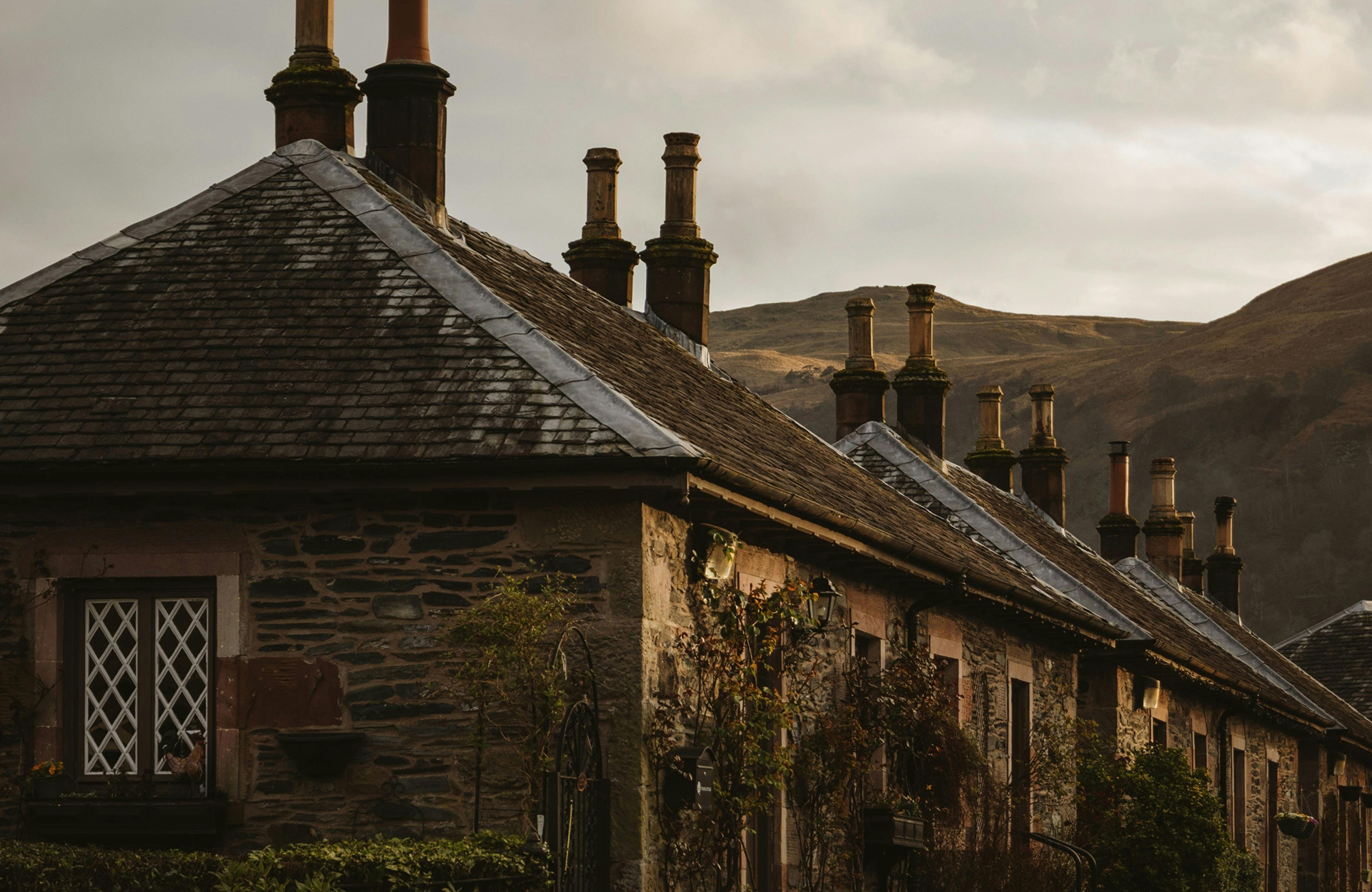
Hampshire is not, primarily, a stone county.
That sounds like an unusual opening for an article about damp in Hampshire stone buildings – but it’s worth saying clearly because it shapes how you should think about damp problems on a Hampshire property. Unlike Dorset, Somerset or Wiltshire, where major limestone outcrops provide a county-wide tradition of stone construction, Hampshire is chalk country. The dominant traditional walling material is flint – the hard nodules of silica found embedded throughout the chalk – combined with lime mortar and often with brick dressings.
Where genuine stone appears in Hampshire’s heritage stock, it does so regionally and specifically. Malmstone – the soft local greensand – defines the buildings of east Hampshire around Selborne and Petersfield. Clunch – a hard chalk used as a building stone – appears in pockets across the chalk downland. Bargate stone – the local ironstone – features on the Surrey border country. Isle of Wight limestone and Binstead stone appear in some south coast properties. And in larger Georgian and Victorian buildings, you’ll find imported stones – Bath stone, Portland – used for prestige work or specific applications.
This guide covers all of these. It also covers flint construction in proper depth, because for most Hampshire heritage owners that’s the actual stone-related damp issue they’re dealing with. We’ll work through each material, the damp problems specific to it, and what proper remediation looks like.
This guide is for owners of Hampshire stone and flint properties dealing with damp, and for the architects, surveyors and heritage consultants advising them. It draws on over a decade of working exclusively on period and listed properties across the county.
A note on language. You’ll see the word “remediation” throughout rather than “treatment.” That’s deliberate. Treating damp implies applying something to a symptom. Remediation means identifying and removing the cause. On a heritage building, where the wrong materials can cause permanent damage to the masonry itself, that distinction matters more than ever.
Why Hampshire Stone And Flint Differ From Brick
Before getting into individual materials, it’s worth understanding why stone and flint walls behave differently from brick walls – and why that affects damp diagnosis and remediation.
Stone and flint are more variable than brick. A solid brick wall is a relatively uniform structure – same material, same size, bonded in regular courses. Stone and flint walls are, by comparison, irregular. The materials vary in size, shape and porosity. The mortar body between them is often substantial, sometimes accounting for as much of the wall’s surface as the stone itself. The wall’s behaviour depends as much on the mortar as on the stone.
Flint walls hold a substantial body of lime mortar. This is the critical point for Hampshire specifically. Flint is rounded, irregular and doesn’t bed cleanly. The lime mortar between flints does significant structural and moisture-management work – far more than the mortar between bricks. When the mortar in a flint wall has been replaced with cement, or has weathered and not been maintained, the wall develops damp problems quickly.
Stone walls often have rubble cores. Many older stone walls – particularly thicker construction – consist of dressed stone facing externally and internally, with a substantial rubble core between. Moisture moving through such a wall doesn’t follow a simple path.
Soft stones are softer than the mortar around them – and that’s intentional. Malmstone and clunch, the soft Hampshire building stones, are deliberately specified with mortar slightly softer than the stone so the mortar takes the wear. When cement is used in repair, this principle is reversed – the cement is harder than the stone, and the stone face starts to take the load. The result is accelerated erosion of historically valuable surfaces, sometimes within a single generation.
These principles apply to every stone and flint building in Hampshire. The specifics change with the material.
Damp In Flint And Brick-And-Flint Buildings (The Defining Hampshire Vernacular)
This is the section that matters most for Hampshire. Flint and brick-and-flint construction is the county’s defining traditional building method. It appears across the north Hampshire downland, the South Downs villages, the Meon Valley, the Test Valley, and the chalk country generally – anywhere flints could be extracted from the chalk or gathered from the fields. Many of the most characteristic Hampshire cottages and farmhouses are built in flint, often with brick used for corners (quoins), openings (jambs and lintels) and decorative banding.
The material itself
Flint is hard, durable and essentially non-porous. Individual flints absorb very little water – the chemistry is similar to glass. This makes flint walls quite different in behaviour from limestone or sandstone walls. The water-management work in a flint wall is done almost entirely by the lime mortar, not by the flint itself.
This has a critical implication: the mortar in a flint wall is doing more work than the mortar in a stone or brick wall. The substantial body of lime mortar between flints absorbs moisture, releases it through evaporation, accommodates wall movement, and provides structural cohesion. When that mortar is compromised, the wall is compromised – far more than the same proportion of mortar failure in a brick wall would suggest.
The damp problems specific to flint walls
Cement repointing trapping moisture in the wall body. The single most common cause of damp in Hampshire flint properties. Cement pointing replaces the breathable lime mortar that was doing the moisture management. Water that gets into the wall – from rain on the upper courses, from ground moisture below, from condensation internally – has no breathable route out. It accumulates in the wall body and emerges where it can, often as patches of internal damp some distance from where the water actually entered.
Failed pointing admitting water directly. Flint walls depend on intact pointing to keep water out of the substantial mortar body. Where the pointing has weathered to the point of small voids or cracks, water enters directly into the wall and creates damp issues that follow the path of least resistance through the wall.
Brick dressings spalling where cement has been used. The brick used for corners, openings and decorative work in brick-and-flint construction is typically soft handmade brick – vulnerable to the same hardness mismatch as soft stone. Cement pointing on these brick elements causes the same accelerated weathering as on any soft heritage brick.
Damp at the junctions between flint and brick. The two materials respond differently to moisture and to inappropriate mortars. Cement pointing applied across both materials creates differential stress at the junction lines, and damp problems frequently appear specifically along these boundaries.
Internal salt staining from accumulated moisture. Where a flint wall has been holding moisture behind cement pointing or cement render for years, the salts dissolved in that moisture build up. When cement is finally removed or fails, extensive salt staining emerges as the salts work out of the wall over months.
Remediation principles for flint walls
- Cement pointing must come off, carefully, with attention to both the flints and the brick dressings. This is genuinely specialist work – flint construction requires understanding the substrate.
- Repointing in matched lime mortar is the core remediation. NHL 3.5 with appropriate aggregate is often appropriate for general flint repointing; lime putty mortars work for sheltered or more sensitive locations.
- The aggregate matters. Local sand sources matched to surviving original pointing produce work that integrates visually with the surrounding wall.
- The finished joint should be appropriate to the wall’s character – sometimes recessed, sometimes flush with the flint surface, never proud or smeared across the flints.
- Listed building consent may be required – particularly in Winchester, Romsey, Petersfield, Titchfield, Wickham and the conservation area villages.
This is the work we do most frequently across Hampshire’s flint heritage. Read more about Lime Mortar Pointing →
Damp In Malmstone Buildings (East Hampshire)
Malmstone is the soft local greensand quarried from the eastern fringe of Hampshire. The malmstone tradition is regionally specific and quite distinctive – it defines the buildings of villages around Selborne, Petersfield, Liss, Steep and the greensand country toward the Surrey border. Gilbert White’s house at Selborne, for example, is built in malmstone, and similar construction appears throughout the surrounding villages.
The material itself
Malmstone is exceptionally soft and exceptionally porous. It’s quarried easily, dressed easily, and weathers readily. Within a generation of being quarried, malmstone develops the gentle, time-worn appearance that characterises the older buildings of east Hampshire. The same softness that makes it beautiful makes it vulnerable.
Malmstone manages moisture through high porosity – the stone itself absorbs significant water and releases it through evaporation. Buildings made of malmstone depend on this absorption-and-release cycle, which requires both breathable mortar and breathable external finishes (or no external finish, where the stone is left exposed).
The damp problems specific to malmstone
Erosion of the stone face from trapped moisture. This is the most dramatic and most damaging issue. Malmstone that’s been sealed with modern paint, cement render, or impermeable coatings holds moisture it can’t release. The stone softens beneath the surface, the surface fails, and pieces of the stone face come away. Once gone, malmstone faces cannot be replaced like-for-like – the damage is essentially permanent.
Salt-related decay. Where moisture is being held against the stone for long periods, dissolved salts crystallise within the stone body. The crystallisation forces flake out, the stone surface fails, and the underlying structure is weakened.
Limewash systems overcoated with modern paint. Many older malmstone buildings were finished with limewash – a thin breathable coating that protected the stone while allowing it to release moisture. Where modern emulsion or masonry paint has been applied over the limewash, the protection is reversed: the modern paint traps moisture, the limewash fails behind it, and the stone begins to suffer.
Internal damp from sealed externals. Same principle as other heritage materials – modern paint or cement render externally seals the wall, internal damp emerges as the consequence.
Failed pointing admitting water directly. As with all heritage stone, pointing failure on malmstone admits water into the wall and creates problems that follow.
Remediation principles for malmstone
- Remove modern paint and impermeable coatings carefully. Aggressive removal can damage the soft stone beneath. Chemical strippers compatible with malmstone, or careful mechanical methods, are required.
- Allow the stone to dry before any new finish is applied. This can take weeks to months depending on how long the modern materials have been sealing the wall.
- Repointing in lime putty mortar is often appropriate – malmstone is too soft for hydraulic limes in most cases. Where exposure justifies it, NHL 2 might be specified.
- Reinstate limewash or breathable mineral paint as the external finish. Malmstone benefits from a protective coating that breathes with the stone.
- Sympathetic indenting may be required where stone faces have been irreversibly damaged – replacing the worst-affected areas with matched malmstone from the same regional source.
Malmstone work is a Hampshire specialism that requires understanding the substrate. General damp companies frequently get this wrong with consequences that are hard to undo.
Damp In Clunch And Chalk-Block Construction
Clunch is a hard form of chalk used as a building stone in pockets across the Hampshire downland. It’s not common in Hampshire compared to flint, but it appears in specific villages and individual buildings, particularly in the north of the county and the chalk country around the South Downs. Clunch was historically valued where flint was scarce or where larger building blocks were required.
The material itself
Clunch is essentially compressed chalk. It’s relatively soft, very porous, and notably vulnerable to weathering when left exposed. Buildings using clunch were almost always either rendered externally (with lime render or limewash) or used clunch only for internal walls and protected positions. Visible exposed clunch on an external elevation is unusual – and where it appears, it usually indicates that an original protective finish has been lost.
The damp problems specific to clunch
Loss of original lime render or limewash. Most clunch problems are downstream of this. Where the original protective finish has weathered away or been removed, the chalk surface is exposed and begins to suffer rapidly. Frost damage, erosion and salt-related decay all accelerate once the protective coating is gone.
Modern render applied over chalk. Where cement render has been applied to clunch walls – sometimes as a “weatherproofing” measure – the trapping of moisture against the soft chalk is severely damaging. Moisture accumulates, the chalk softens, and the wall body can be compromised.
Internal damp through compromised walls. Where clunch walls have been compromised by modern materials or have lost their protective finishes, internal damp follows. Clunch walls in particular need to breathe – the substrate isn’t durable enough to hold up under prolonged moisture loading.
Remediation principles for clunch
- Remove inappropriate modern materials carefully, with patience to avoid damaging the soft substrate beneath.
- Allow the chalk to dry.
- Reinstate appropriate lime render – typically a softer specification than for harder substrates – finished with limewash.
- Where the chalk has been significantly damaged, structural assessment and consolidation may be required.
Clunch is a niche Hampshire material that requires specialist understanding. We don’t see it often, but where we do, the principles are consistent.
Damp In Bargate Stone Buildings (Surrey/Hampshire Border)
Bargate stone is a local ironstone – a hard, brown-grey sandstone – quarried historically from the Surrey-Hampshire border country. It appears in heritage construction across the north-eastern fringe of Hampshire and into adjacent parts of Surrey, particularly in villages around Hindhead, Bramshott and the south Surrey/north Hampshire border country.
The material itself
Bargate stone is durable and harder than most Hampshire stones. It weathers slowly and holds detail well. Buildings made of bargate stone often combine it with brick (for openings and dressings) and have a distinctive grey-brown character. The stone tolerates more exposure than malmstone or clunch.
The damp problems specific to bargate stone
Hardness mismatch from cement pointing – the same issue as all heritage stones. Bargate is harder than Hampshire’s softer stones, but still softer than cement. Cement pointing causes the same accelerated weathering at the joint edges as on any heritage stone.
Mixed construction junction issues. Many bargate properties combine the stone with brick dressings. The materials have different absorption rates and respond differently to inappropriate mortars. Damp problems often appear at the junctions.
Penetrating damp on exposed elevations. Bargate properties on the Surrey/Hampshire border country can be quite exposed, and where pointing has failed or where modern materials have compromised the wall, penetrating damp follows.
Remediation principles for bargate stone
- Lime mortar matched to the original – typically NHL 3.5 for repointing, calibrated to the stone and exposure.
- Care at mixed-material junctions – the mortar specification may need to be adjusted across the wall to suit both the stone and any brick dressings.
- Breathable external finishes where these were original – limewash, silicate paint, or natural stone left unfinished.
Damp In Isle Of Wight Stone And South Coast Construction
Along the south coast of Hampshire – and on the Isle of Wight itself, which is part of the broader Hampshire-Solent heritage region – Isle of Wight limestone (Binstead stone, Bembridge limestone and related stones) appears in some larger Georgian and Victorian properties and in civic and ecclesiastical buildings.
This is regional stone of more limited residential use than the materials covered above. Where it appears in heritage residential construction, the principles are consistent: lime mortar, breathable finishes, no cement, attention to matching where surviving original work is available.
Damp In Imported Stone (Bath Stone, Portland Stone In Hampshire Properties)
Larger Georgian and Victorian properties in Hampshire – particularly in Winchester, Romsey, and the bigger market towns – sometimes incorporate imported stones from elsewhere in southern England. Bath stone (oolitic limestone from the Bath region) appears in some prestige work. Portland stone (from the Dorset coast) appears in major buildings and occasionally in residential dressings.
Bath stone in Hampshire properties
Bath stone is soft, fine-grained, and bedded – characteristics that influence both its use and its damp behaviour. Where Bath stone appears in Hampshire heritage construction, it’s typically used for prestige dressings, copings, sills, or whole prestige elevations on substantial properties.
The damp issues with Bath stone in Hampshire are essentially the same as with Hampshire’s native soft stones: cement pointing causes hardness mismatch and accelerated weathering, modern paint traps moisture, and the appropriate remediation is lime-based.
Portland stone in Hampshire properties
Portland is harder and more durable than Bath. It weathers more slowly and tolerates somewhat stronger lime mortars where exposure justifies. Damp issues are less common on Portland than on softer stones, but where they appear, they typically arise at junctions with softer materials in mixed construction, or where bedding planes have been disregarded in original construction.
Remediation principles for imported stones in Hampshire
- Match the original specification – Bath stone needs Bath-stone-appropriate mortar; Portland needs Portland-appropriate.
- Attention to junctions between imported stone and Hampshire’s native materials (flint, brick, malmstone) – these are frequent failure points.
- Sympathetic stone repair rather than cement-based patching where stone has been damaged.
The Hampshire Regional Pattern: Where Each Stone Appears
Knowing what stone you’re dealing with helps locate the right specialist understanding. Across Hampshire, the regional pattern is roughly:
Flint and brick-and-flint – dominant across the chalk downland generally. The north Hampshire downland (around Andover, Whitchurch, Overton, Hartley Wintney), the South Downs villages, the Meon Valley, the Test Valley, the chalk country between Winchester and Petersfield. Anywhere flints could be gathered from the fields or extracted from the chalk.
Malmstone – concentrated in east Hampshire: Selborne, Petersfield, Liss, Steep, Greatham and the greensand belt running through the eastern edge of the county and into adjacent parts of west Sussex and south Surrey.
Clunch – in pockets across the chalk downland, particularly in villages where flint or other building materials were less available. Not common, but distinctive where it appears.
Bargate stone – concentrated in the north-eastern fringe of Hampshire and adjacent Surrey: the area around Hindhead, Bramshott, and the south Surrey/north Hampshire border country.
Isle of Wight limestone (Binstead, Bembridge) – in some south coast properties and Isle of Wight construction generally.
Bath stone – in prestige Georgian and Victorian construction, particularly in Winchester, Romsey, and larger properties across the county.
Portland stone – in major buildings, occasional residential dressings, and some south coast Georgian work.
Mixed construction – most importantly: most Hampshire properties combine multiple materials. Flint walls with brick dressings, stone plinths with brick upper construction, stone window surrounds in flint walls. Reading a Hampshire property requires understanding all the materials present.
Listed Buildings And Stone Construction In Hampshire
A significant proportion of Hampshire’s stone and flint buildings are listed, and the legal framework around damp work on listed properties is worth understanding.
Most damp work on a listed heritage building requires consent. Repointing, render replacement, ground level adjustment, alteration of original features – all typically require listed building consent. Carrying out unauthorised work is a criminal offence, and inappropriate modern materials applied to historic masonry may need to be removed at the owner’s expense if discovered during future inspection.
Conservation officers across Hampshire are typically supportive of lime-based remediation. Removing inappropriate cement and reinstating matched lime mortar is consent-friendly. Specifications prepared by heritage specialists familiar with the consent process are far more likely to support successful applications.
Specific consent considerations for Hampshire stone and flint buildings include:
- Matching evidence – where surviving original mortar can be sampled to inform the specification
- Indenting and stone repair – where damaged stone (particularly malmstone or clunch) requires replacement with matched new stone
- Flint repointing methodology – given the specialism involved
- Render reinstatement – where original lime render has been lost or replaced with cement
- Limewash systems – restoration of traditional finishes where these have been lost
We work with conservation officers across Hampshire regularly – particularly in Winchester, Romsey, Petersfield, Alresford, Titchfield, Wickham and the village conservation areas – and can prepare specifications and method statements that support consent applications.
Read more on damp remediation in listed buildings →
The Common Interventions Causing Damp In Hampshire Stone And Flint Buildings
Across Hampshire’s stone and flint heritage stock, the same handful of post-war interventions are responsible for the majority of current damp problems:
Cement repointing. The single most damaging intervention. Particularly damaging on flint walls (where the mortar body is doing more of the work than in stone construction) and on soft stones like malmstone and clunch. Found on virtually every Hampshire heritage building we survey that’s had any repair work in the last seventy years.
Cement render. Applied as a “weatherproofing” measure to stone and flint buildings during the post-war decades. Seals the wall, traps moisture, prevents breathing. Particularly damaging on malmstone and clunch where the substrate is so soft.
Modern masonry paint. Applied to stone and flint surfaces, often as a continuation of cement render systems. Vapour-impermeable, prevents the wall from breathing, traps moisture and salts behind the paint film.
Gypsum plaster internally. Applied to internal walls of stone and flint properties, sealing the internal moisture release route. Particularly damaging when applied directly over original lime plaster.
Raised ground levels. Patios, drives, paving, landscaping raising the external ground level above the original DPC line or the lowest breathing course. Bridges the building’s defence against ground moisture.
Chemical damp proof course injection. Applied to stone and flint buildings on the assumption of rising damp – usually an inappropriate diagnosis on a heritage property. The drilling damages the historic fabric, the chemical addresses a problem that’s rarely present, and the actual cause remains untouched.
Aggressive disc-cutting during cement removal. Where contractors have used power tools without care to remove existing cement pointing from flint or stone, the surrounding masonry – particularly the soft flints and the brick dressings – has been damaged in the removal process itself.
What Proper Damp Remediation Looks Like On A Hampshire Stone Or Flint Building
The principles are consistent across all the materials, with specifics adjusted for the substrate:
Heritage damp survey first. Detailed assessment of the construction type, the existing condition, any previous interventions, the specific materials in question, and the actual cause of the damp. Where appropriate, samples of original mortar are taken for analysis and matching.
Diagnose the actual cause. Not the symptom. Whether the cause is cement pointing trapping moisture in a flint wall, modern paint sealing a malmstone surface, raised ground levels bridging the DPC, condensation on cold internal walls, or external detail failure – that’s what gets addressed.
Remove inappropriate modern materials carefully. Cement pointing by hand. Cement render with sustained patience and the right tools. Modern paint with methods compatible with the substrate. Each removal step takes care because the masonry beneath is what we’re protecting. No aggressive disc-cutting on heritage substrates.
Allow the wall to dry. Once the impermeable modern materials are off, the wall needs time to release the moisture it’s been holding. This can take weeks. Rushing the next stage produces work that fails.
Reinstate appropriate lime systems. Matched lime mortar for repointing – NHL grade and aggregate calibrated to the specific material. Lime render where the building was originally rendered. Lime plaster internally. Limewash or breathable mineral paint as the finish. All matched to the building’s age, region and original specification.
Address external causes. Reduce raised ground levels. Restore blocked airbricks. Repair failed gutters and downpipes. Address any external detail that’s contributing to the damp.
Patience throughout. Proper damp remediation on a Hampshire heritage building typically takes weeks to months depending on scope. The work can’t be rushed and shouldn’t be.
Frequently Asked Questions
My Hampshire property is flint – is the damp likely to be rising damp?
Almost certainly not. Genuine capillary rising damp is rare in pre-1919 buildings, and flint walls in particular are unlikely to suffer rising damp because the flint itself is essentially non-porous – capillary moisture moves through the mortar, not the flint, and the substantial lime mortar body in a flint wall handles low-level moisture through breathability. What gets diagnosed as rising damp on Hampshire flint properties is almost always something else – cement pointing trapping moisture, raised ground levels bridging the DPC, condensation, or failed external pointing admitting water directly.
Can I just have my flint wall repointed in cement?
No – and you shouldn’t allow any contractor to do so. Cement is harder than the lime mortar that should be between flints, and the mortar body in a flint wall does significant moisture-management work. Cement pointing on a flint wall traps moisture, accelerates damage to the brick dressings, and prevents the wall from working as designed. Lime mortar is the correct specification for any flint or brick-and-flint wall.
What’s the difference between flint and stone for damp purposes?
Flint is essentially non-porous – individual flints absorb very little water. Stone (especially the soft Hampshire stones like malmstone and clunch) is porous and absorbs significant water. This means a flint wall depends almost entirely on the mortar for moisture management, while a stone wall depends on both the stone and the mortar. Damp diagnosis on flint walls focuses heavily on the mortar; on stone walls it considers both materials.
My malmstone property has erosion on the stone face – can it be repaired?
It depends on the extent. Localised damage can sometimes be addressed by sympathetic indenting – replacing the worst-affected areas with matched new malmstone. More extensive damage is harder to address; in some cases the stabilisation of the surviving stone is the realistic outcome rather than restoration to a pristine state. A heritage survey will identify what’s recoverable.
How do I know what materials my Hampshire property is built from?
Local context usually gives strong indications. North Hampshire downland and Test Valley properties are very likely to be flint or brick-and-flint. East Hampshire properties around Selborne and Petersfield are likely to involve malmstone. Properties in Winchester, Romsey and the larger market towns are often mixed construction with brick, stone dressings and sometimes Bath or Portland stone for prestige work. A heritage survey will identify the specific materials and the appropriate specification.
How much does damp remediation cost on a Hampshire stone or flint property?
It varies significantly with scope. A focused single-elevation repointing project typically runs into the low thousands. Full external remediation of a substantial flint property – cement removal, repointing across multiple elevations, ground level reduction – can run into the tens of thousands. We provide a specific written quotation after the heritage survey so you know exactly what you’re investing.
Will my listed Hampshire property need consent for damp work?
If your property is listed, work that affects its character or fabric typically requires consent. The good news is that lime-based remediation is generally what consent expects. Where consent is needed, we can prepare specifications and method statements that support the application. We work with conservation officers across Hampshire regularly.
How long does damp remediation take on a heritage Hampshire building?
It varies with scope. A focused single-elevation flint repointing project typically runs 3–6 weeks once on site. Comprehensive multi-elevation work can run 8–16 weeks or longer. Heritage masonry work cannot be rushed – cement removal in particular requires patience to avoid damaging the substrate – and the lime systems need appropriate cure time.
Are you insured?
Yes – Bramley & Stone holds public liability insurance up to £5 million. Insurance and indemnity details can be provided on request before any work begins.
Do you work on mixed construction (flint with brick dressings, stone with brick, etc)?
Yes – most Hampshire heritage properties involve mixed construction, and the specifications we prepare reflect this. Different materials in the same wall may require different mortar specifications to suit each substrate, with careful attention to the junctions where they meet.
Where We Work
We carry out damp surveys and remediation on stone and flint buildings across:
Central Hampshire – Winchester, Alresford and the surrounding downland villages. Mixed construction including flint, brick and (in larger properties) imported stones.
North Hampshire – Andover, Whitchurch, Basingstoke, Odiham, Hook, Hartley Wintney, Overton and the village stock across the north of the county. Strong flint and brick-and-flint construction.
East Hampshire – Petersfield, Alton, Selborne, Liss, Steep and the greensand and chalk villages toward the Surrey border. Malmstone is concentrated in this part of the county.
The Test Valley – Romsey, Stockbridge and the Test Valley villages. Mixed construction with significant flint stock.
The Meon Valley and south Hampshire – Bishop’s Waltham, Wickham, Botley, Hambledon. Flint and brick-and-flint heritage stock.
The New Forest fringe and the south-west – Lymington, Ringwood, Fordingbridge. Mixed construction.
South coast Hampshire – Fareham, Titchfield, Southampton, Portsmouth. Pockets of heritage construction including some Isle of Wight stone in larger properties.
Surrey/Hampshire border country – Bargate stone construction in the north-eastern fringe.
If your Hampshire property isn’t in one of these areas, please get in touch – we cover the whole county.
Learn more about our wider heritage restoration work in Dorset →
What To Do Next
If you own a stone or flint property in Hampshire and you’re concerned about damp, the right first step is a heritage damp survey by a specialist who understands both the construction type and the heritage damp issues that affect it.
A heritage survey gives you:
- A diagnosis of the actual cause of the damp on your specific building
- An assessment of the materials present and any damage caused by previous interventions
- A written report setting out our findings and recommendations
- A specification for remediation suitable for supporting any required consent applications
- A specific written quotation for any work proposed